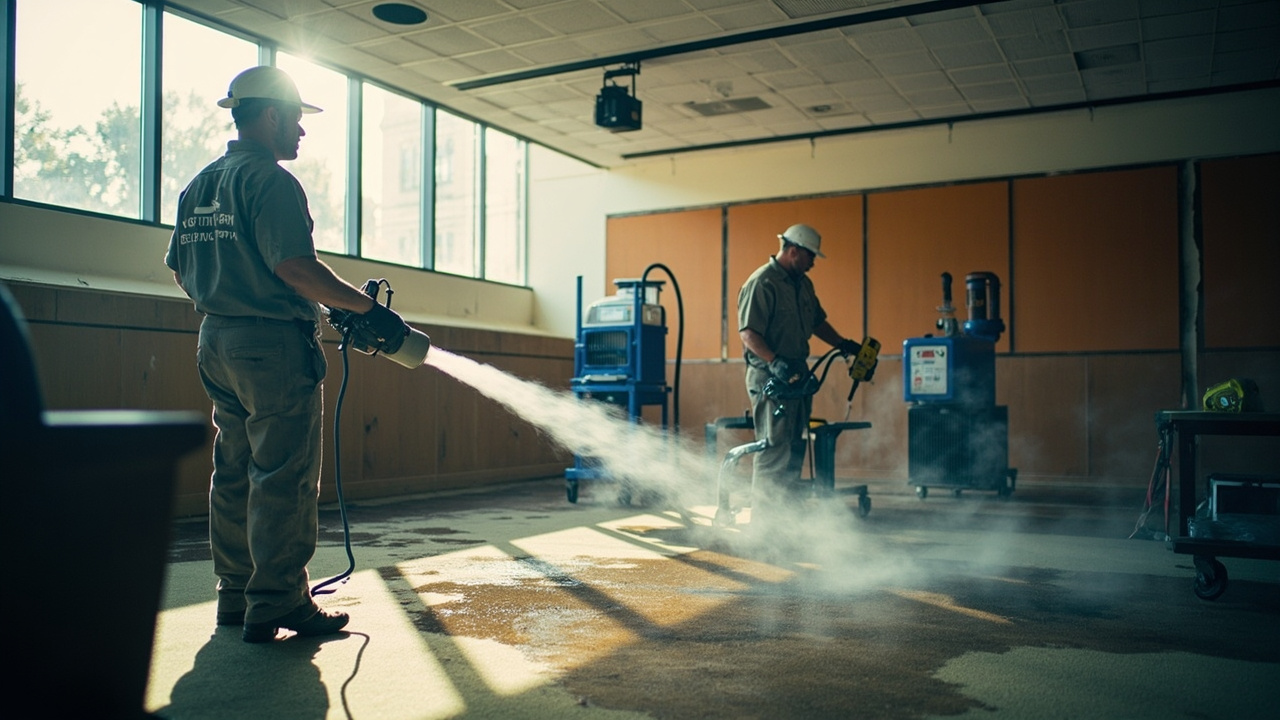
Atlanta sits on Piedmont clay soil that expands 10 to 15 percent when saturated and contracts equally during dry periods. This constant movement stresses underground utilities serving campus buildings. Universities built during the 1960s and 1970s expansion boom used rigid cast iron and clay tile drainage systems. These materials crack under soil pressure, allowing groundwater infiltration and creating pathways for catastrophic failures. Spring rainfall averages five inches per month in Atlanta, saturating soil and maximizing foundation movement. Older campuses in neighborhoods like Virginia Highland and Candler Park face the highest risk due to infrastructure age and topography that channels water toward building foundations.
Victory Water Damage Restoration Atlanta understands local building construction methods and material choices common to metro Atlanta educational facilities. We work regularly with university facilities departments, coordinating through established procurement processes and meeting Georgia Department of Administrative Services requirements for public institution contractors. Our familiarity with Atlanta's commercial construction practices means faster damage assessment and more accurate restoration scopes. We maintain relationships with local structural engineers, industrial hygienists, and testing labs who provide third-party verification services when required by risk management departments or governing boards. This local network accelerates project timelines and ensures compliance with institutional policies.