menu

Commercial Mold Remediation in Atlanta – Minimize Downtime, Protect Your Assets

Industrial-grade mold abatement designed for Atlanta's humid commercial environments. We contain the spread, restore air quality, and keep your business operational with minimal disruption to operations.

Slider Image 1
Slider Image 2
Slider Image 3
Slider Image 4
Slider Image 5
Slider Image 7
Slider Image 8
Slider Image 9
Slider Image 10
Slider Image 11

Why Atlanta's Climate Makes Commercial Mold a Business Liability

Atlanta's average annual humidity exceeds 70 percent, creating ideal conditions for mold colonization in commercial facilities. When combined with the city's heavy rainfall and aging infrastructure in Midtown and Downtown, water intrusion becomes a recurring threat to warehouses, office buildings, and retail spaces.

Mold does not respect business hours. A single water leak in a ceiling cavity or HVAC condensate pan can produce visible mold growth within 48 hours. For commercial property managers, the risk extends beyond aesthetics. Mold compromises indoor air quality, violates OSHA workplace safety standards, and can trigger costly legal claims from tenants or employees.

Business mold remediation requires a different approach than residential work. You cannot afford to shut down operations for weeks while contractors experiment with generic protocols. Commercial mold mitigation demands containment strategies that isolate affected zones, allowing unaffected areas to remain functional.

Atlanta's Building Code mandates specific ventilation standards for commercial spaces. When mold growth is discovered, you must address the moisture source and the biological contamination simultaneously. Ignoring either component guarantees recurrence. Commercial mold abatement involves treating porous materials like drywall and insulation, decontaminating HVAC ductwork, and applying antimicrobial agents to non-porous surfaces.

The longer you wait, the more invasive the remediation becomes. Mold spreads through airflow and physical contact. What starts as a small patch in a storage room can migrate through shared ventilation systems, contaminating multiple floors. Commercial mold cleanup is not about cosmetics. It is about restoring a safe, compliant workspace and protecting your balance sheet from escalating remediation costs.

Why Atlanta's Climate Makes Commercial Mold a Business Liability
How We Execute Commercial Mold Removal Without Halting Operations

How We Execute Commercial Mold Removal Without Halting Operations

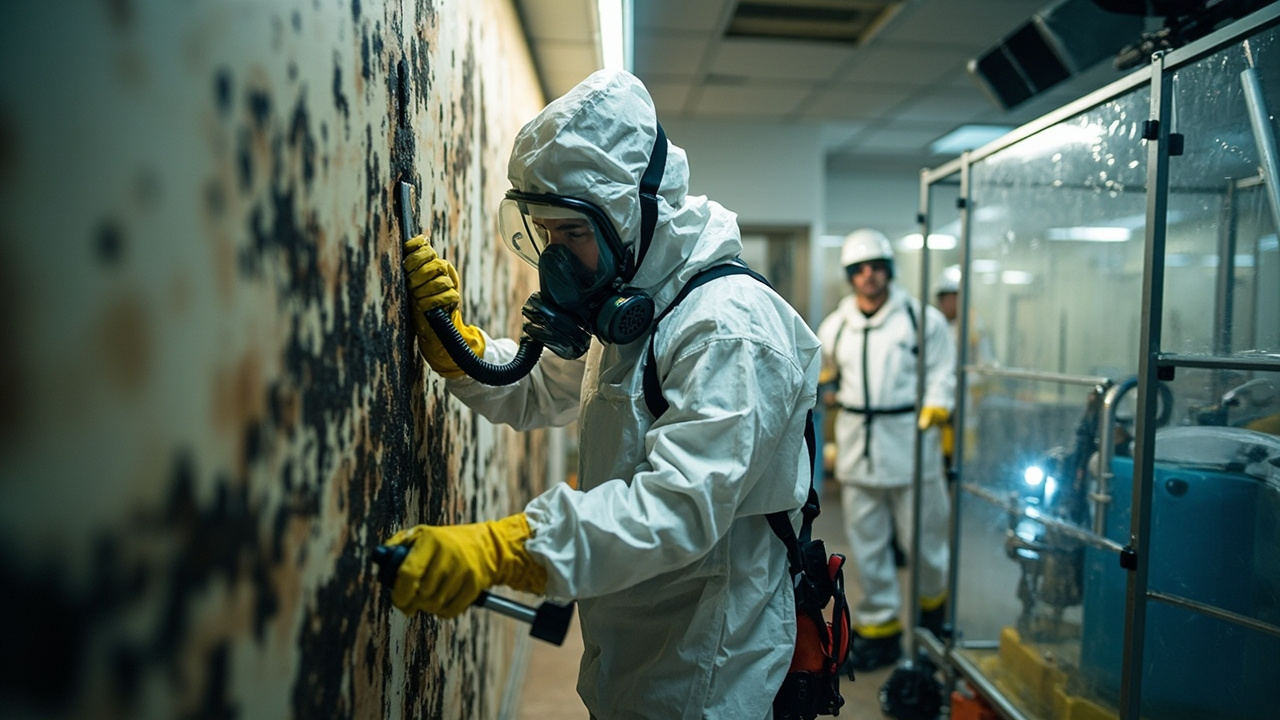
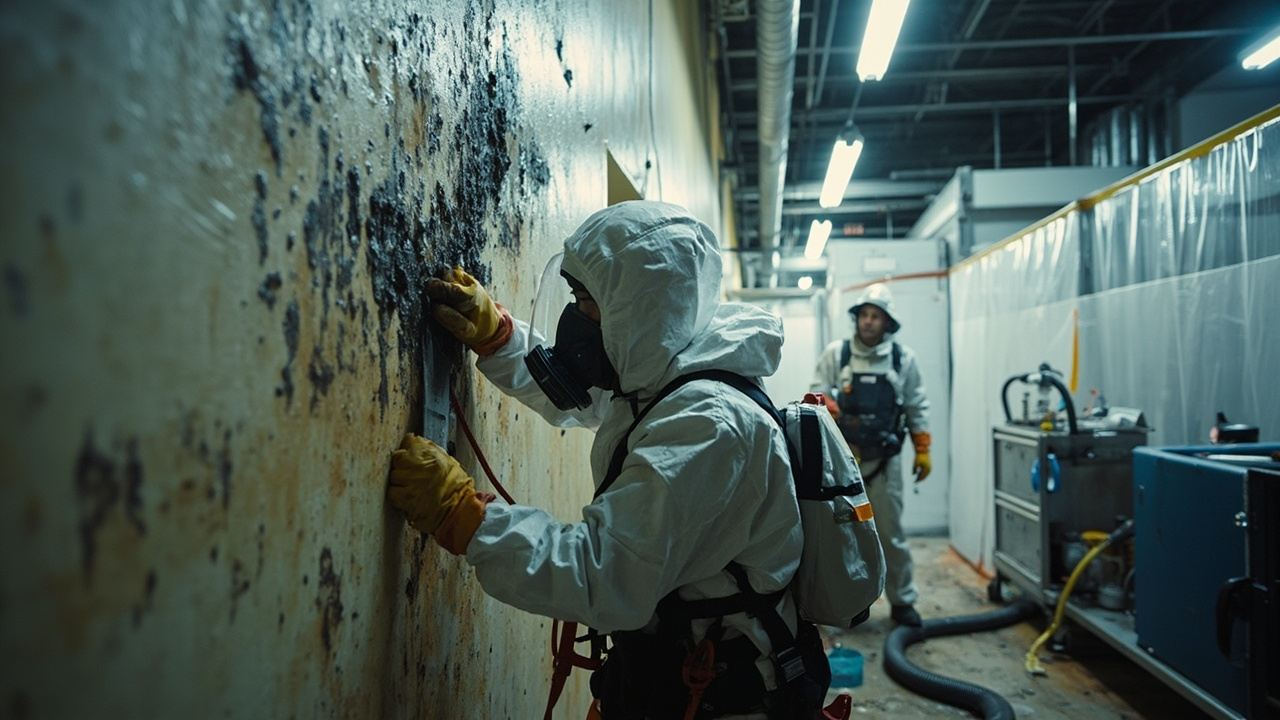
Victory Water Damage Restoration Atlanta uses negative air pressure containment to isolate affected zones. We deploy industrial HEPA air scrubbers that create a controlled environment, preventing cross-contamination to occupied areas. This allows your team to continue working in unaffected sections while we address the mold problem.

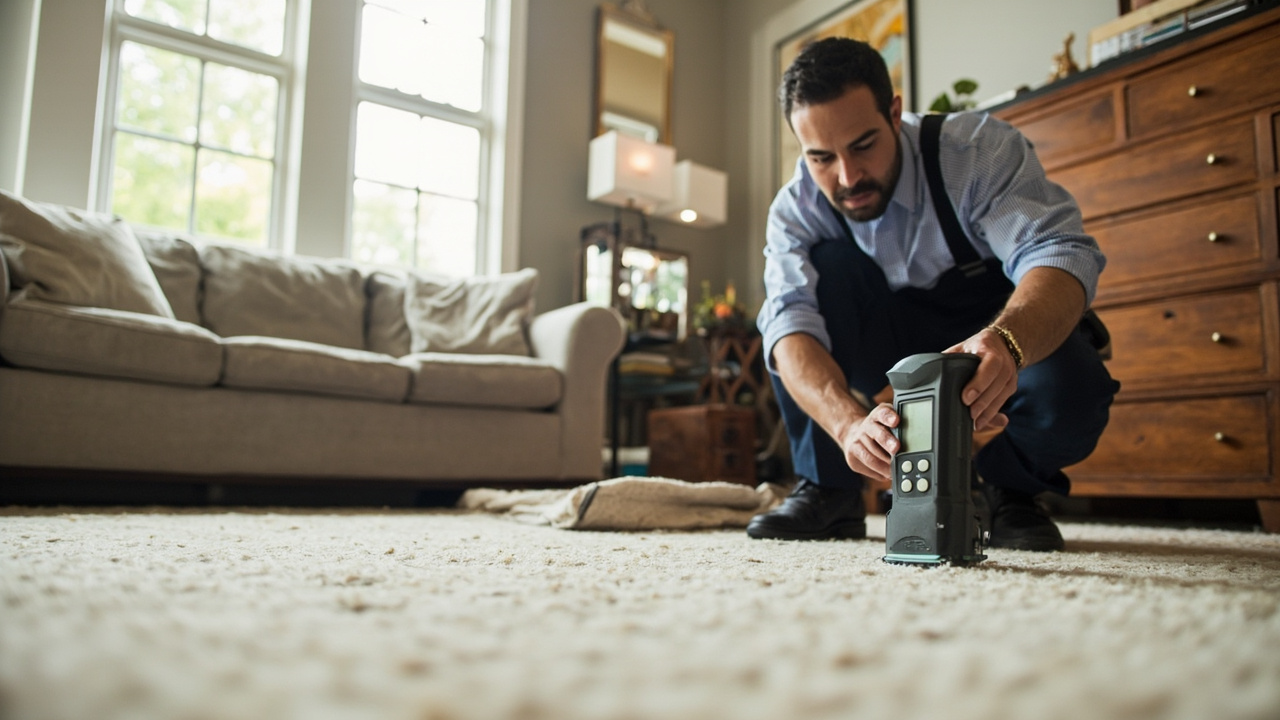
Our process starts with moisture mapping using thermal imaging cameras and hygrometers. We identify hidden water intrusion points behind walls, under flooring, and within ceiling plenums. Mold growth is always a symptom of a moisture problem. We trace the source, whether it is a leaking roof membrane, condensation from inadequate insulation, or a failed HVAC drain line.

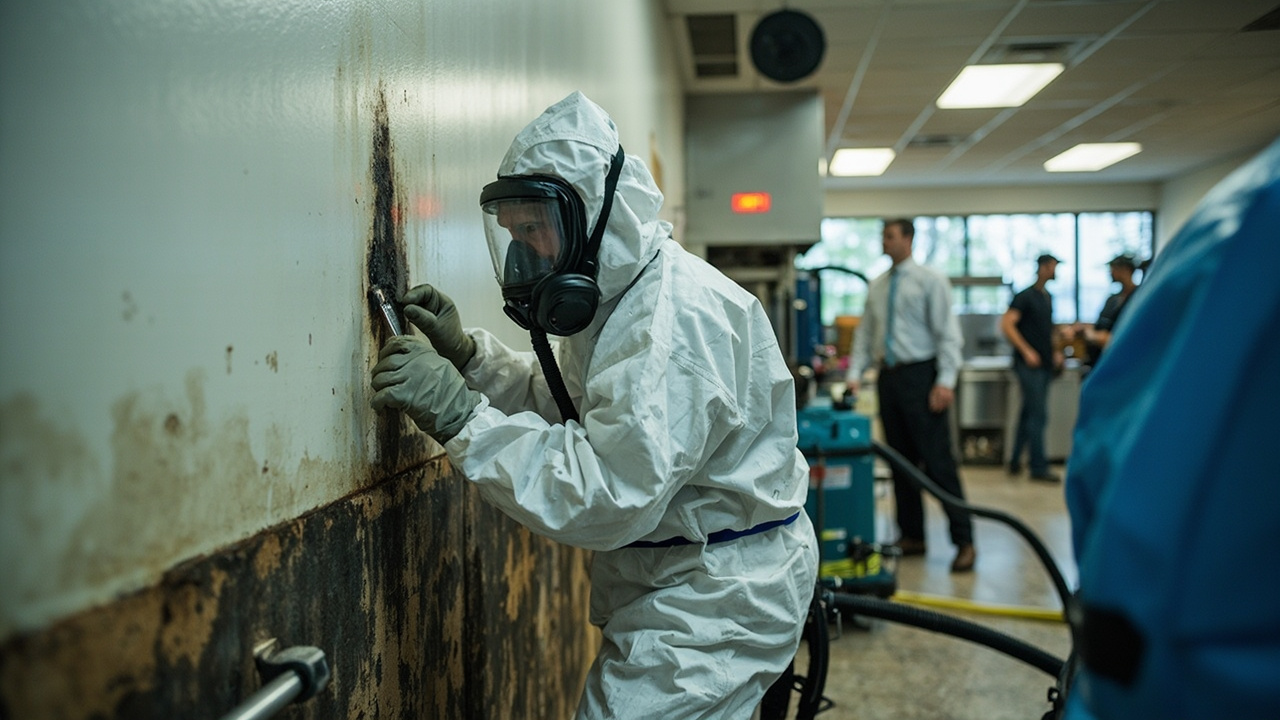
Once we identify the moisture source, we remove contaminated materials. Porous substrates like drywall, ceiling tiles, and insulation cannot be salvaged when mold penetration exceeds surface level. We extract these materials, bag them in sealed polyethylene, and dispose of them per EPA guidelines. Non-porous surfaces like concrete, metal studs, and glass receive antimicrobial treatment and HEPA vacuuming.

We then treat the affected structure with EPA-registered fungicides and encapsulants. This prevents spore reactivation and provides a sterile substrate for reconstruction. Air quality testing follows remediation to verify spore counts meet clearance thresholds. We do not consider a project complete until post-remediation samples confirm the environment is safe for reoccupation.

For commercial properties in Buckhead and Sandy Springs, we coordinate with your facility management team to minimize tenant disruption. We work after hours when necessary, stage equipment deliveries to avoid blocking loading docks, and provide daily progress updates to keep stakeholders informed. Business mold remediation is about precision, not speed. Rushed work leads to incomplete remediation and recurring problems.

What Happens During Your Commercial Mold Remediation Project

Commercial Mold Remediation in Atlanta – Minimize Downtime, Protect Your Assets
01

Site Assessment and Containment

We conduct a facility walkthrough to map contaminated zones and identify moisture sources. Containment barriers are erected using polyethylene sheeting and steel framing. Negative air machines create pressure differentials that pull air into the work zone, preventing spore migration. Critical pathways remain accessible while contaminated areas are sealed. This phase typically requires four to eight hours depending on facility size.
02

Material Removal and Decontamination

Contaminated materials are removed using controlled demolition techniques. We mist surfaces during removal to suppress airborne spores. HEPA vacuums extract loose debris before bagging. Non-porous surfaces are treated with antimicrobial solutions and scrubbed clean. This phase generates the most waste and requires coordinated disposal. Duration varies based on contamination extent, but most projects require two to five days of active remediation work.
03

Air Clearance and Documentation

Post-remediation air samples are collected by a third-party industrial hygienist. Spore counts must fall below baseline thresholds before we remove containment barriers. You receive a full remediation report including pre- and post-testing data, photos, and disposal manifests. This documentation is critical for insurance claims and regulatory compliance. Clearance testing adds 24 to 48 hours to project timelines but provides objective proof of successful remediation.

Why Atlanta Property Managers Choose Local Commercial Mold Specialists

Atlanta's commercial real estate market includes everything from historic buildings in Old Fourth Ward to modern high-rises in Buckhead. Each structure presents unique remediation challenges. Older buildings often lack vapor barriers and have outdated HVAC systems that circulate unconditioned air. Newer construction relies on tighter building envelopes, which trap moisture when mechanical ventilation fails.

We understand Georgia's building codes and Atlanta's permitting process. Commercial mold abatement often requires coordination with the City of Atlanta Department of Planning, particularly when work impacts fire-rated assemblies or structural elements. We handle permit acquisition and coordinate inspections to keep your project compliant.

Our crews are IICRC-certified in applied microbial remediation. This certification requires annual continuing education on evolving remediation standards and EPA protocols. You are not hiring a general contractor who occasionally handles mold. You are hiring specialists who understand fungal biology, moisture dynamics, and industrial hygiene principles.

We also maintain relationships with commercial insurance adjusters who service the Atlanta metro. Mold claims are complex because coverage varies widely based on policy language and causation. We provide detailed documentation that supports your claim, including moisture readings, photo evidence, and scope-of-work justifications. This reduces claim disputes and accelerates reimbursement.

Victory Water Damage Restoration Atlanta operates with the capacity to handle large-scale commercial projects. We maintain inventory of containment equipment, air scrubbers, and dehumidifiers sized for commercial applications. When a 20,000-square-foot warehouse needs remediation, we do not rent equipment or subcontract work. We deploy our own teams and equipment, which means faster mobilization and better quality control.

Local expertise matters when business continuity is at stake. We know which Atlanta neighborhoods experience chronic flooding, which building materials were used during different construction eras, and how to navigate tenant coordination in multi-use properties.

What to Expect When You Hire Us for Commercial Mold Remediation

Rapid Response and Project Timelines

We deploy assessment teams within four hours of contact for emergency situations. Non-emergency projects receive site visits within 24 hours. Most commercial mold mitigation projects span three to ten business days depending on contamination extent and facility size. We provide a detailed timeline during the initial assessment, outlining containment setup, active remediation, and clearance testing phases. After-hours and weekend work is available to minimize operational disruption. You receive daily progress updates and can adjust schedules based on your facility's needs. We do not drag out projects to inflate billable hours.

Comprehensive Moisture and Mold Assessment

Our initial assessment includes thermal imaging to detect hidden moisture, hygrometer readings to measure relative humidity, and visual inspection of HVAC systems and building envelopes. We identify the root cause of mold growth, whether it is poor drainage, HVAC condensation, or roof leaks. You receive a written assessment detailing contamination extent, affected materials, and recommended remediation protocols. This assessment serves as the foundation for insurance claims and remediation planning. We do not upsell unnecessary services. If the problem can be solved with targeted repairs and improved ventilation, we tell you.

Certified Remediation and Air Quality Restoration

We follow IICRC S520 standards for mold remediation, which dictate containment protocols, personal protective equipment, and disposal procedures. Contaminated materials are removed and disposed of per EPA and Georgia EPD regulations. Non-porous surfaces are cleaned and treated with antimicrobial solutions. Air scrubbers run continuously during active work to capture airborne spores. Post-remediation air quality testing verifies that spore counts meet safe thresholds. You receive lab reports, remediation photos, and disposal documentation. The result is a workspace that meets OSHA indoor air quality standards and protects employee health.

Post-Remediation Support and Prevention Planning

Mold remediation is only effective if the underlying moisture problem is resolved. We provide recommendations for HVAC upgrades, improved drainage, and building envelope repairs to prevent recurrence. Many clients implement quarterly moisture inspections to catch problems early. We offer maintenance contracts that include thermal imaging scans and humidity monitoring for high-risk areas like basements and mechanical rooms. If mold returns within the remediated area due to our workmanship, we address it. However, new water intrusion from unrelated sources requires separate remediation. Prevention is always cheaper than remediation.

Frequently Asked Questions

You Have Questions,
We Have Answers

What do professionals use for mold remediation? +

Professionals use HEPA-rated air filtration systems, antimicrobial solutions, and containment barriers to prevent cross-contamination during commercial mold remediation. We apply EPA-registered biocides and fungicides to affected surfaces after physical removal. Industrial dehumidifiers and negative air machines control humidity and airborne spore dispersal. For porous materials like drywall or ceiling tiles, removal is standard. Non-porous surfaces get treated and sealed. In Atlanta's humid climate, moisture mapping tools identify hidden water sources driving mold growth. Professional equipment removes mold at the source while protecting unaffected areas of your facility. This protects employees, minimizes liability, and ensures compliance with OSHA standards.

How much does it cost to professionally get rid of mold? +

Commercial mold remediation in Atlanta varies based on square footage, contamination severity, and business type. Small-scale projects start lower, while large warehouse or multi-story office buildings require comprehensive abatement. Costs increase if HVAC systems need cleaning or structural materials require replacement. Atlanta's humidity creates persistent moisture issues that demand thorough source correction, not just surface treatment. Insurance often covers remediation if mold results from a covered peril like pipe bursts or roof leaks. Delaying remediation increases costs exponentially as mold spreads. Request a detailed scope of work and moisture assessment before committing. Fast action reduces downtime and protects your bottom line.

How much does professional mold removal cost? +

Professional mold removal costs depend on contamination extent, affected materials, and required containment protocols. Projects involving asbestos or lead paint add complexity and expense. Atlanta commercial properties often face mold in HVAC systems, crawl spaces, and flat roofs due to high humidity and summer thunderstorms. Larger square footage equals higher labor and equipment costs. Structural drying, air scrubbing, and post-remediation testing add to total expense. Many businesses see mold remediation as a necessary investment to avoid liability claims, code violations, and operational shutdowns. Obtain multiple quotes with itemized breakdowns. The cheapest bid often means incomplete work that allows mold to return within months.

What is commercial mold remediation? +

Commercial mold remediation is the professional removal and treatment of mold contamination in business facilities, office buildings, warehouses, retail spaces, and industrial properties. It includes containment, HEPA filtration, antimicrobial treatment, structural drying, and source correction to prevent recurrence. Unlike residential work, commercial projects require strict adherence to OSHA regulations, minimal business disruption, and coordination with property management or tenants. Atlanta's commercial buildings face mold from roof leaks, poor ventilation, and plumbing failures. The goal is restoring a safe indoor environment while minimizing downtime and protecting liability exposure. Proper documentation and clearance testing ensure compliance with health codes and insurance requirements.

What kills mold permanently? +

Nothing kills mold permanently without addressing the moisture source. Mold spores exist everywhere. They need water, oxygen, and organic material to colonize. Professionals use EPA-registered antimicrobials and biocides to kill active mold growth, then apply encapsulants to seal surfaces. The key is eliminating water intrusion through roof repairs, dehumidification, improved ventilation, or drainage correction. In Atlanta, high humidity and seasonal rainfall create constant moisture challenges. Simply spraying bleach does not work on porous materials and fails to address root causes. Permanent mold control requires environmental modification. Control moisture, and you control mold. Ignore moisture, and mold returns regardless of treatment.

How do Japanese bathrooms not get mold? +

Japanese bathrooms resist mold through superior ventilation design, quick-drying materials, and daily maintenance habits. Many feature heated floors, wall-mounted exhaust fans, and waterproof wall panels instead of grout-heavy tile. Japanese homeowners squeegee walls and floors after every use, removing standing water before mold can establish. Atlanta's climate differs significantly. High humidity and poor bathroom ventilation in older commercial buildings create mold havens. Adopting similar practices helps. Install high-capacity exhaust fans, use mold-resistant materials during renovations, and implement cleaning protocols that remove moisture daily. Prevention costs less than remediation. Small habit changes reduce long-term mold risk in any climate.

Can black mold be fully remediated? +

Black mold can be fully remediated when professionals follow IICRC S520 standards. Remediation involves containment, HEPA air filtration, physical removal of contaminated materials, antimicrobial treatment, and source correction. Black mold requires the same moisture conditions as other mold species. Remove the water source, and black mold cannot return. Atlanta properties often have hidden moisture in crawl spaces, behind walls, or in HVAC systems. Incomplete remediation leaves spores and moisture, allowing regrowth. Professional teams use moisture meters, thermal imaging, and post-remediation testing to verify complete removal. Full remediation is possible, but only when moisture issues are permanently resolved. Cutting corners guarantees recurrence.

Is professional mold removal worth it? +

Professional mold removal is worth it for commercial properties facing liability exposure, employee health complaints, or visible contamination. DIY approaches fail to address hidden mold in HVAC ducts, wall cavities, or subfloors. Professionals use containment protocols that prevent spore dispersal to clean areas, protecting business operations. In Atlanta, humidity-driven mold spreads fast. Delayed or incomplete removal leads to structural damage, increased remediation costs, and potential lawsuits. Insurance claims require professional documentation and clearance testing. Professional removal minimizes downtime, ensures compliance with health codes, and protects your reputation. The cost of doing it right is lower than the cost of doing it twice.

Is mold remediation tax deductible? +

Mold remediation may be tax deductible for commercial properties as a repair expense under IRS guidelines. If remediation restores property to pre-loss condition, it qualifies as a deductible repair. If it improves the property beyond original condition, it may be capitalized and depreciated. Atlanta business owners should consult a CPA familiar with commercial real estate. Remediation related to casualty losses, like storm damage or pipe bursts, may offer additional deductions. Keep detailed invoices, scope of work documents, and before-and-after photos. Tax treatment depends on your business structure, property use, and specific circumstances. Professional tax advice ensures compliance and maximizes deductions.

Can you permanently get rid of black mold? +

You can permanently remove black mold by eliminating moisture sources and following professional remediation protocols. Black mold is not inherently harder to remove than other species. It requires water, organic material, and time to grow. Professionals remove contaminated materials, treat surfaces with antimicrobials, and correct underlying moisture issues like leaks, condensation, or poor ventilation. Atlanta's humidity makes moisture control critical. Dehumidifiers, improved HVAC systems, and building envelope repairs prevent recurrence. Permanent removal depends on environmental control, not just surface treatment. If moisture returns, so will mold. Address the root cause, and black mold stays gone. Ignore it, and you face repeated contamination.

How Atlanta's Humidity and Aging Infrastructure Accelerate Commercial Mold Growth

Atlanta's subtropical climate produces summer dew points above 70 degrees, which keeps indoor relative humidity elevated even with air conditioning. Many older commercial buildings in areas like Downtown and West End were constructed before modern HVAC standards, relying on passive ventilation that cannot manage moisture loads. When you combine high humidity with inadequate ventilation, you create an environment where mold colonizes within 72 hours of water intrusion. Commercial mold removal in Atlanta is not a seasonal issue. It is a year-round threat driven by climate and building age. Facilities with flat roofs, poor drainage, and outdated waterproofing face the highest risk.

Georgia does not require mold remediation licensing, which means any contractor can claim expertise. However, proper commercial mold abatement requires understanding of building science, microbial ecology, and containment engineering. Victory Water Damage Restoration Atlanta employs IICRC-certified technicians who receive ongoing training in evolving remediation standards. We also maintain relationships with local industrial hygienists who provide third-party testing and clearance verification. Atlanta property managers rely on us because we document every phase of remediation, provide transparent pricing, and understand the liability risks associated with mold exposure claims. Choosing local expertise protects your investment and reduces long-term risk.
Water Damage Restoration Services in The Atlanta Area

While we provide rapid mobile water damage restoration services directly to your doorstep throughout the Atlanta metropolitan area, you can also view our primary service location on the map below. This helps visualize our operational reach and assures you that expert assistance is always within your vicinity. We are always ready to deploy our dedicated teams to your precise location, ensuring swift and effective service whenever you need us, guaranteeing peace of mind.

Address:
Victory Water Damage Restoration Atlanta, 1055 Howell Ml Rd, Atlanta, GA, 30318

Additional Services We Offer

Our news updates

Latest Articles & News from The Blogs

Alpharetta Water Damage Specialists for Fast Mold Prevention and Drying in North FultonWater emergencies in Alpharetta require immediate professional intervention…

Alpharetta Water Damage Specialists for Fast Mold Prevention and Drying in North Fulton

Alpharetta Water Damage Specialists for Fast Mold Prevention and Drying in North FultonWater emergencies in Alpharetta require immediate professional intervention…

Safe and Professional Sewage Backup Cleanup in Atlanta (Don't Handle This Alone)

Professional Sewage Backup Cleanup and Restoration in Atlanta GeorgiaA sewage backup in your Atlanta home or business is a serious…

Deciding to Clean or Replace Water Damaged Carpet in Your Edgewood Home

Water damage in an Edgewood home creates an immediate crisis that requires fast decision making. If you walk into your…

Contact Us

Mold does not wait for convenient timing. Call Victory Water Damage Restoration Atlanta at (678) 397-3666 for immediate assessment and containment. We minimize downtime, restore air quality, and protect your bottom line.