
Finding a dark circle on your ceiling can cause immediate stress. In the current 2026 climate here in Chamblee, the humidity and heavy rain patterns often lead to household leaks. You might wonder if that spot is a new problem or just something left over from a previous repair. Identifying the difference between an active leak and a dead stain is the first step in protecting your property. Homeowners near Peachtree Boulevard or the quiet neighborhoods around Chamblee Dunwoody Road often face these issues due to aging infrastructure or the intense Georgia weather. If you find yourself in a situation where the water is spreading quickly, you can find help with How to Get Fast Emergency Water Damage Restoration in Atlanta When Every Minute Counts.
Immediate Ways to Check Your Chamblee Ceiling Spot
Your first move involves observation without disturbing the area. Look closely at the edges of the spot. Active water damage usually has a soft or blurred perimeter. The moisture wicks into the drywall fibers and creates a bleeding effect. Old stains often have a very sharp and defined border known as a tide mark. These marks happen when the water evaporates and leaves behind minerals and dirt. If the border looks like a crisp line, you are likely looking at an old issue. If the border is fuzzy and seems to be creeping outward, you have an active leak that requires immediate attention. Many residents in the North DeKalb area deal with this during the peak of the 2026 storm season.
Another indicator involves the presence of drips or actual standing water. If the spot is currently dripping, you have a high-priority emergency. Even if it is not dripping, look for a glisten. Shine a flashlight across the surface of the ceiling at an angle. This technique highlights the texture of the drywall. Wet paint or plaster will reflect light differently than dry material. If the area looks shiny or oily, moisture is currently present on the surface. This is a common sign of Emergency Help for a Burst Pipe in Atlanta and How to Find Fast Cleanup. You should move any furniture or valuables away from the area immediately to prevent further loss.
Identifying Active Moisture by Touch and Texture
If you can safely reach the ceiling with a ladder, use the back of your hand to feel the spot. Do not push hard on the drywall. Wet drywall loses its structural integrity and can crumble with very little pressure. Active water damage will feel cold to the touch. This happens because of evaporative cooling. As the water moves through the material and hits the air in your room, it draws heat away. An old, dry stain will feel the same temperature as the rest of the ceiling. If the spot feels significantly colder than the surrounding white space, moisture is moving through the board right now. This is a primary diagnostic step we use when assessing homes in Chamblee.
Texture provides the next clue. Press very gently with one finger. Active water damage makes drywall feel spongy or soft. It might even feel like wet cardboard. If the material gives way or feels like it has a hollow space behind it, the water has already saturated the core of the gypsum board. A dry stain will feel hard and firm. It might be discolored, but the structural strength remains intact. If you notice the ceiling is sagging or bowing downward, the situation is critical. Sagging indicates that water is pooling on top of the drywall. This poses a collapse risk. For those living in the 30341 or 30366 zip codes, these signs often appear after heavy afternoon thunderstorms or when an upstairs appliance fails.
The Appearance of Drywall Water Damage in DeKalb County
Color tells a story about the source of the water. Fresh water leaks from a supply line usually start as a light yellow or tan color. Over time, these turn into a darker brown. If the spot has a green or black fuzzy appearance, you are looking at mold growth. In the 2026 Georgia humidity, mold can begin to grow on wet ceiling materials within 24 to 48 hours. If you see these colors, do not touch the area. Mold spores can spread through your HVAC system and affect the air quality in your entire home. This is particularly common in older bungalows where ventilation might not be optimal.
If the spot is located directly under a bathroom or kitchen, the water might contain soap or debris. This can result in a grayish or greasy appearance. In some cases, a leak from a roof might bring down tannins from wood framing, causing a very dark coffee-colored stain. Understanding these visual cues helps you communicate with a professional restoration team. If you are managing a larger property, you might want to look into Minimizing Business Downtime with Atlanta Commercial Water Damage Restoration to ensure your operations are not impacted by these ceiling failures.
Comparing Active Leaks and Dead Stains
It is helpful to see the differences side by side. This table outlines the common characteristics found during a typical 2026 home inspection in Chamblee.
| Characteristic | Active Water Damage | Old or Dead Stain |
|---|---|---|
| Surface Temperature | Noticeably cold to the touch | Room temperature |
| Surface Texture | Soft, spongy, or damp | Hard and firm |
| Border Appearance | Blurred or bleeding edges | Sharp, defined rings |
| Reflectivity | Shiny or wet under a flashlight | Dull and matte |
| Shape Changes | Grows larger over several hours | Stays the same size for weeks |
Why HVAC Systems Cause Ceiling Damage in Atlanta
Many ceiling spots in Chamblee homes originate in the attic. Your HVAC system works hard to combat the 2026 humidity levels. This process creates a large amount of condensation. Every modern air conditioner has a primary drain line and a secondary emergency pan. If the primary line clogs with algae or debris, the water backs up. If the secondary pan is rusted or the float switch fails, that water overflows directly onto your ceiling. This often happens right above a hallway or a closet. If you see a spot appearing during a heatwave, your AC unit is the most likely suspect.
Residents near the Interactive College of Technology or along the Peachtree corridor often have multi-story homes where HVAC units are tucked into tight spaces. A small drip can go unnoticed for days until a large spot forms. We recommend checking your attic pan once a month during the summer. If you see standing water in the metal pan under your unit, you have a problem that will eventually lead to ceiling damage. Regular maintenance is the best way to avoid a messy cleanup and expensive drywall repairs. This is a common issue we see when providing Sandy Springs Flood Cleanup and Professional Water Extraction Services in nearby areas.
Plumbing Issues Common in Older Chamblee Bungalows
Chamblee features a mix of historic bungalows and newer developments. In the older sections of town, many homes still utilize copper or even older galvanized pipes. These materials can pinhole leak due to age or shifting soil conditions in DeKalb County. A pinhole leak is particularly deceptive. It might spray a very fine mist that takes weeks to create a visible spot on the ceiling. By the time you see the stain, the wood framing inside the ceiling may already be saturated. This leads to hidden mold growth that is much harder to treat.
Newer homes often use PEX piping. While PEX is durable, the fittings can sometimes loosen or be damaged by rodents in the attic. If a spot appears suddenly after you have used an upstairs shower or bathtub, the drain assembly is likely the culprit. Testing this is simple. Have one person watch the spot while another person runs the water upstairs. If the spot begins to drip or expand, you have confirmed the source. This type of diagnostic work is essential before starting any restoration process. For those in high-end areas, we offer specialized care, which you can read about in Professional Water Damage Restoration for Luxury Homes in Buckhead.
The Role of Professional Thermal Imaging and Moisture Meters
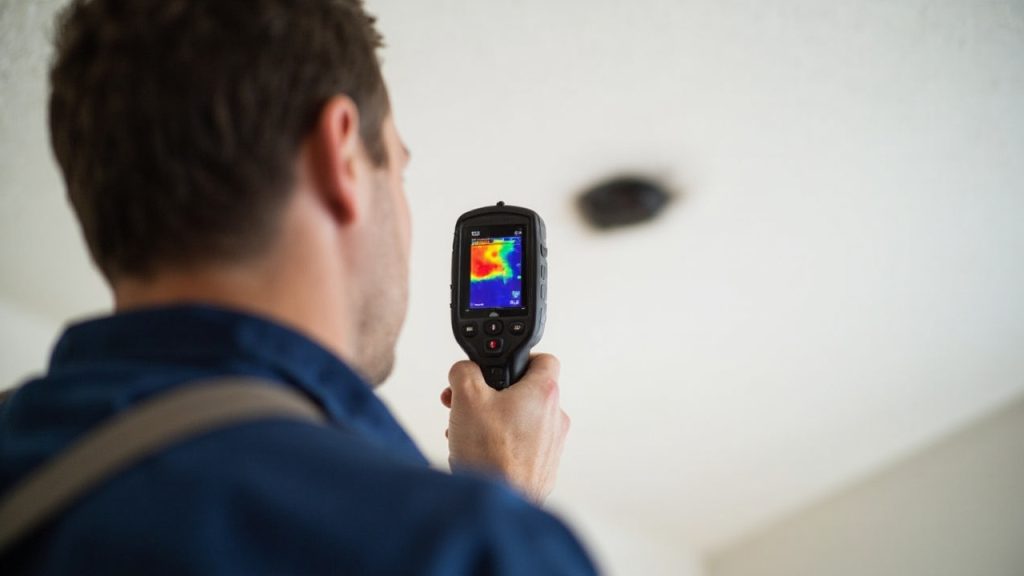
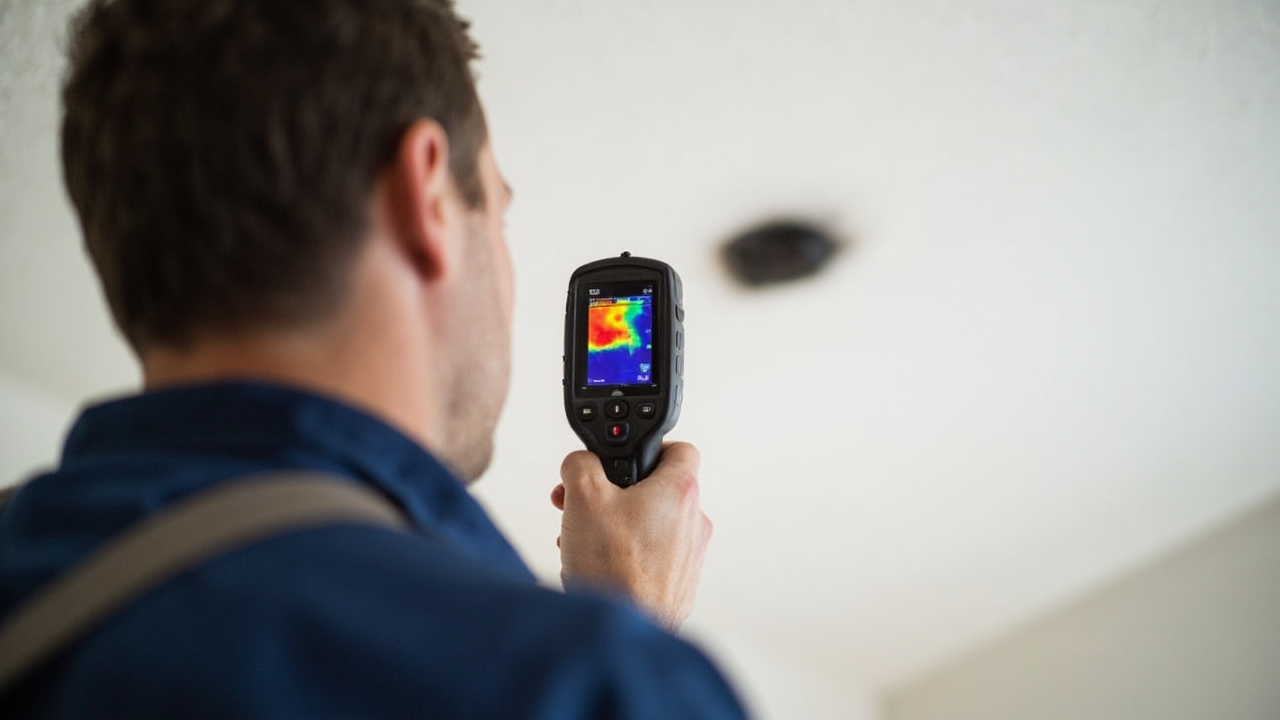
Visual inspection only goes so far. Professional restoration experts use technology to see through the ceiling. Thermal imaging cameras detect temperature differences. Water retains cold or heat differently than dry wood and drywall. On the screen of a thermal camera, an active leak will show up as a dark blue or purple bloom against the warmer orange or yellow of the dry ceiling. This allows us to find the exact path the water is taking. Sometimes the leak starts ten feet away from where the spot actually appears because water travels along the ceiling joists.
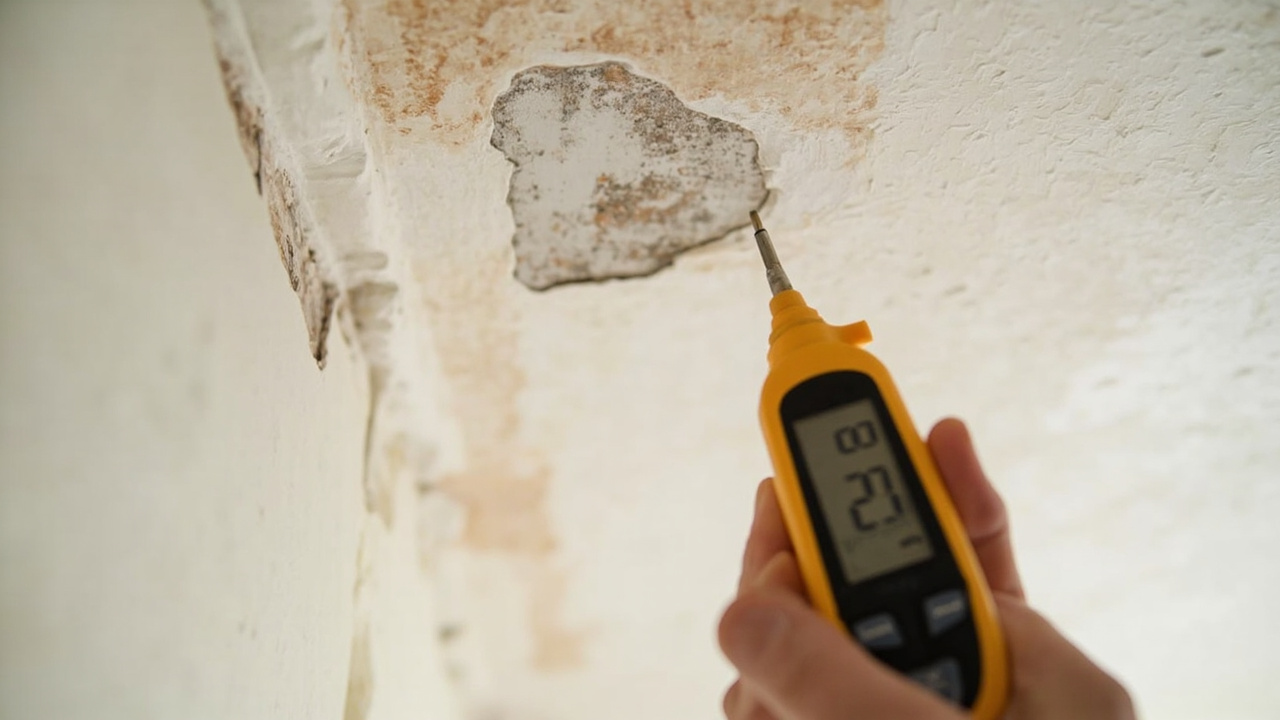
Moisture meters provide a definitive reading of the water content inside the material. We use two types of meters. Non-invasive meters use radio frequencies to check for moisture without leaving marks. Invasive meters use two small pins to get a reading from deep within the drywall. In 2026, these tools are more accurate than ever. They help us determine if a spot is truly dry or if it is holding on to dangerous levels of moisture that could support mold. Here is a look at how we interpret those readings.
| Drywall Moisture Reading | Risk Level | Required Action |
|---|---|---|
| 0% to 12% | Normal | No restoration needed for moisture |
| 13% to 17% | At Risk | Monitor the area and identify the humidity source |
| 18% to 25% | Active Saturation | Professional drying and source repair required |
| Over 25% | Critical Failure | Potential material removal and mold prevention needed |
Why Quick Action Prevents Mold Growth in Georgia
The 2026 humidity in the Atlanta metro area is a major factor in how quickly water damage turns into a mold problem. According to the Environmental Protection Agency, mold can grow on most surfaces within 48 hours of exposure to moisture. If you ignore a ceiling spot because you think it might be old, you are taking a significant risk. Even a small amount of dampness behind the drywall can lead to a colony of Stachybotrys or Aspergillus. These molds can trigger respiratory issues and allergies for your family.
Proper drying requires more than just a desk fan and an open window. We follow strict standards set by the Institute of Inspection Cleaning and Restoration Certification. This involves using industrial-grade air movers and LGR dehumidifiers. These machines pull moisture out of the air and the structural materials much faster than residential equipment. Our goal is to reach a dry standard that ensures mold cannot survive. If we find that mold has already started, we switch to remediation protocols. This includes using HEPA filtration and antimicrobial treatments to clean the area and prevent spores from spreading through the rest of the Chamblee home.
Structural Drying Steps for Ceiling Restoration
Once we identify an active leak, the restoration process follows a specific order of operations. We do not just slap paint over the stain. That would only hide a growing problem. Here is how we handle it.
- Source Identification. We find where the water is coming from and ensure the plumber or roofer has fixed the break.
- Water Extraction. If there is standing water in the attic or on top of the ceiling, we remove it using specialized vacuums.
- Material Evaluation. We determine if the drywall is salvageable. If it is too saturated or sagging, we remove the damaged sections.
- Structural Drying. We set up high-velocity fans to move air across the wet surfaces. This speeds up evaporation.
- Dehumidification. We use large dehumidifiers to lower the relative humidity in the room, which pulls moisture out of the wood and drywall.
- Cleaning and Sanitizing. We apply antimicrobial solutions to prevent mold and bacteria growth.
- Reconstruction. Once the area is verified dry with moisture meters, we replace the drywall and match the texture and paint of your existing ceiling.
Helping Chamblee Residents with Insurance Documentation
Many homeowners worry about the cost of ceiling repairs. Most standard insurance policies cover water damage if the cause is sudden and accidental. This includes burst pipes or a failed water heater. It usually does not cover damage caused by long-term neglect, such as a roof leak that has been dripping for years. Because we have worked in Chamblee for over 15 years, we know how to document the damage to help your claim move forward. We take photos of the moisture meter readings, the thermal imaging results, and the source of the leak.
Providing this level of detail to your adjuster makes the process much smoother. We work with all major carriers to ensure the restoration meets the current 2026 industry standards. We keep a detailed log of the drying process, showing the daily drop in moisture levels. This proof of professional drying often prevents insurance companies from denying future mold claims. If you live near North DeKalb or any of the surrounding neighborhoods, having a local expert who understands DeKalb County building codes and insurance requirements is a massive advantage.
Professional Restoration Standards in 2026
The technology for water restoration continues to improve. In 2026, we use smart sensors that can be left on-site to monitor drying progress remotely. This means we do not have to disturb you as often to check on the equipment. We can see the humidity and temperature levels from our office and know exactly when your ceiling is dry. This efficiency saves time and money for the homeowner. It also ensures that the home is safe for your family to occupy during the process.
Do not wait for a small spot to become a large hole in your ceiling. If you are unsure if that mark in your Chamblee home is active or old, reach out for a professional inspection. We can provide a clear answer in minutes using our specialized tools. Taking action now protects your home value and your health. Whether you are dealing with a drip in a small bungalow or a major leak in a large estate, getting the right information is the most important step you can take today.
{
“@context”: “https://schema.org”,
“@type”: “BlogPosting”,
“headline”: “Identifying Active Water Damage on Your Chamblee Ceiling Versus an Old Stain”,
“description”: “Learn how to identify if a dark spot on your Chamblee ceiling is active water damage or an old stain. Professional restoration advice for Atlanta homeowners.”,
“wordCount”: 2347,
“datePublished”: “2026-02-15T07:17:00.000Z”,
“dateModified”: “2026-02-15T07:17:00.000Z”,
“inLanguage”: “en-US”,
“mainEntityOfPage”: {
“@type”: “WebPage”,
“@id”: “https://victorywaterdamagerestorationatlanta.com”
},
“publisher”: {
“@type”: “LocalBusiness”,
“name”: “Victory Water Damage Restoration Atlanta”,
“url”: “https://victorywaterdamagerestorationatlanta.com”
},
“author”: {
“@type”: “Organization”,
“name”: “Victory Water Damage Restoration Atlanta”,
“url”: “https://victorywaterdamagerestorationatlanta.com”
},
“image”: {
“@type”: “ImageObject”,
“url”: “https://victorywaterdamagerestorationatlanta.com/wp-content/uploads/2026/03/how-to-tell-if-that-dark-spot-on-your-chamblee-cei-1.jpg”
}
}
{
“@context”: “https://schema.org”,
“@type”: “LocalBusiness”,
“name”: “Victory Water Damage Restoration Atlanta”,
“url”: “https://victorywaterdamagerestorationatlanta.com”,
“address”: {
“@type”: “PostalAddress”,
“addressLocality”: “Atlanta”
},
“areaServed”: {
“@type”: “City”,
“name”: “Atlanta”
}
}
{
“@context”: “https://schema.org”,
“@type”: “BreadcrumbList”,
“itemListElement”: [
{
“@type”: “ListItem”,
“position”: 1,
“name”: “Home”,
“item”: “https://victorywaterdamagerestorationatlanta.com”
},
{
“@type”: “ListItem”,
“position”: 2,
“name”: “Blog”,
“item”: “https://victorywaterdamagerestorationatlanta.com/blog”
},
{
“@type”: “ListItem”,
“position”: 3,
“name”: “Identifying Active Water Damage on Your Chamblee Ceiling Versus an Old Stain”
}
]
}
{
“@context”: “https://schema.org”,
“@type”: “Service”,
“serviceType”: “Water Damage Restoration”,
“provider”: {
“@type”: “LocalBusiness”,
“name”: “Victory Water Damage Restoration Atlanta”,
“url”: “https://victorywaterdamagerestorationatlanta.com”
},
“areaServed”: {
“@type”: “City”,
“name”: “Atlanta”
},
“description”: “Learn how to identify if a dark spot on your Chamblee ceiling is active water damage or an old stain. Professional restoration advice for Atlanta homeowners.”
}