
How to Save Heirloom Furniture and Antiques After an Ansley Park Water Leak
Ansley Park homes carry a legacy of elegance and history that few other Atlanta neighborhoods can match. When a pipe bursts or a heavy storm causes a leak in these historic residences, the threat to your heirloom furniture is immediate. Historic homes near McClatchey Park or the Atlanta Botanical Garden often house high value antiques that require specialized care. You cannot treat a 19th century mahogany sideboard the same way you treat modern particle board furniture. Understanding how to manage content restoration Atlanta property owners face in 2026 is the difference between preserving a family legacy and losing it forever. You must act within the first few hours to prevent permanent swelling, finish failure, and mold growth on your most prized possessions.
The humidity in Georgia remains a constant challenge for restoration. In 2026, we see even more volatile weather patterns that put stress on older plumbing systems in Midtown and Ansley Park. If you find standing water in your home, your priority is safety. Once the area is secure, you must focus on the items that cannot be replaced. We focus on the science of drying and the physics of moisture movement to ensure your antiques survive the initial saturation. Many homeowners overlook the fact that antiques are hygroscopic. This means they naturally absorb and release moisture from the air. When a leak occurs, the equilibrium moisture content of the wood is disrupted. This leads to physical changes in the structure of the piece.
Residents living along The Prado or Peachtree Circle often possess collections that have been in their families for over a century. These items are sensitive to the microclimate of your home. A sudden influx of water from a failed water heater or a leaking roof changes the vapor pressure in the room. This pressure forces moisture into the cellular structure of the wood. If you do not stabilize the environment, the wood will expand beyond its physical limits. This leads to cracks in the joinery and the failure of ancient adhesives.
Understanding the Vulnerability of Antique Wood Finishes
Antiques often feature delicate finishes like shellac, wax, or early lacquers. These materials react poorly to liquid water and high humidity. White rings or clouding happen when moisture gets trapped under the finish. This is often called blushing. If the water is not removed quickly, the wood fibers underneath will swell. This swelling causes the finish to crack or flake off. In Ansley Park homes, where many pieces have been in the family for generations, this damage can feel catastrophic. However, modern restoration techniques allow us to stabilize these pieces before the damage becomes permanent.
Solid wood behaves differently than veneered pieces. Most high end antiques from the 18th and 19th centuries use high quality veneers over secondary woods. When water enters these layers, the animal glue used in historic construction often dissolves. This leads to buckling or lifting of the veneer. If you notice your furniture starting to blister, do not press down on it. This can cause the brittle wood to snap. Instead, maintain a stable environment and call for fast emergency water damage restoration in Atlanta to control the humidity levels in the room immediately.
We see many cases near Winn Park where historic homes have hidden leaks behind plaster walls. By the time the water is visible, the humidity has already saturated the air for days. This environment softens the wood and makes it more susceptible to scratches and dents during the moving process. Our team uses specialized padded wraps that allow the wood to breathe while protecting it from physical impact. We never use plastic wrap directly against a wet wood finish as this can trap heat and moisture. This creates a greenhouse effect that destroys the finish in minutes.
Wood is a living material that responds to its surroundings. In the current 2026 climate, we must account for the rapid rise in ambient humidity during a leak. When the relative humidity stays above 60 percent, the wood continues to pull moisture from the air even if it is not sitting in liquid water. This causes the wood grain to raise. Raised grain feels rough to the touch and can require professional sanding and refinishing to correct. Our goal is to stabilize the piece before these irreversible changes occur.
Immediate Action Steps for Water Damaged Heirlooms
Your first 60 minutes are critical. Follow these steps to minimize the impact on your antiques while waiting for professional help to arrive at your Ansley Park residence.
- Move smaller items to a dry and climate controlled area of the house.
- Place aluminum foil or plastic coasters under the legs of heavy furniture to stop wood from wicking water from the carpet.
- Do not wipe off wet furniture with a dry cloth if it is covered in silt as this can scratch the finish.
- Avoid using heat guns or hair dryers because rapid drying causes wood to warp and split.
- Open windows only if the outdoor humidity is lower than the indoor humidity.
- Blot standing water from flat surfaces using a soft and clean cotton towel.
- Remove any wet cushions or upholstery from wooden frames to allow air to circulate around the wood.
If you are dealing with a significant loss, you may need a fast cleanup for a burst pipe to ensure the structural drying process begins alongside the content restoration. Every minute that an antique sits in a high humidity environment increases the risk of mold. Mold can begin to grow on organic surfaces like wood and fabric in as little as 24 to 48 hours under current Atlanta climate conditions. In 2026, we use rapid response teams to ensure these timelines are met for every client.
You should also avoid moving heavy furniture if the floor is soft or buckling. In many Ansley Park homes, the subflooring is original wood that can weaken when wet. Trying to drag a heavy armoire across a wet floor can damage both the furniture and the home structure. It is better to wait for a team with the proper moving equipment. We use air ride dollies and specialized lifting tools to move high value pieces without putting stress on the wood joints.
Comparing Wood Types and Water Sensitivity
Different wood species respond to water in unique ways. Some are more resilient due to their density or natural oils, while others absorb water like a sponge. The table below outlines common woods found in Ansley Park antiques and their typical reaction to saturation.
| Wood Species | Saturation Rate | Risk of Warping | Primary Concern |
|---|---|---|---|
| Mahogany | Moderate | Medium | Veneer delamination and staining |
| Walnut | Low | Low | Finish clouding and joint expansion |
| Oak | High | High | Tannin staining and grain raising |
| Pine | Very High | Severe | Structural warping and rot |
| Cherry | Moderate | Medium | Darkening and surface checking |
| Maple | Moderate | High | Twisting and significant grain swelling |
| Teak | Very Low | Very Low | Surface residue from natural oils |
Oak furniture is particularly prone to tannin staining. When oak gets wet, the natural tannins in the wood react with the moisture and any metals in the environment. This can leave dark blue or black stains on the wood that are difficult to remove. If you have an oak piece, you must ensure that it does not come into contact with metal hardware or damp iron objects during the drying process. Our team uses specific tannin blockers to help preserve the original color of the oak grain during restoration.
Advanced Psychrometrics and 2026 Atlanta Climate Data
Restoration in 2026 relies heavily on psychrometrics. This is the study of the thermodynamic properties of moist air. We do not just put a fan in a room. We calculate the exact amount of dehumidification needed to pull moisture out of the air at a rate that is safe for wood. If the air is too dry too quickly, the wood will shrink and crack. This is known as checking. If the air stays too humid, the wood will continue to swell and mold will colonize the surface.
The current 2026 climate data for the Atlanta metro area shows an increase in average indoor dew points during the summer months. In Ansley Park, we often see outdoor dew points reaching 72 to 75 degrees Fahrenheit. This means that if your air conditioning fails during a water loss, the air inside your home can hold a massive amount of moisture. We use LGR (Low Grain Refrigerant) dehumidifiers that can reduce the moisture in the air to below 30 grains per pound. This creates a vapor pressure differential that gently pulls moisture out of the deep pores of your antique furniture.
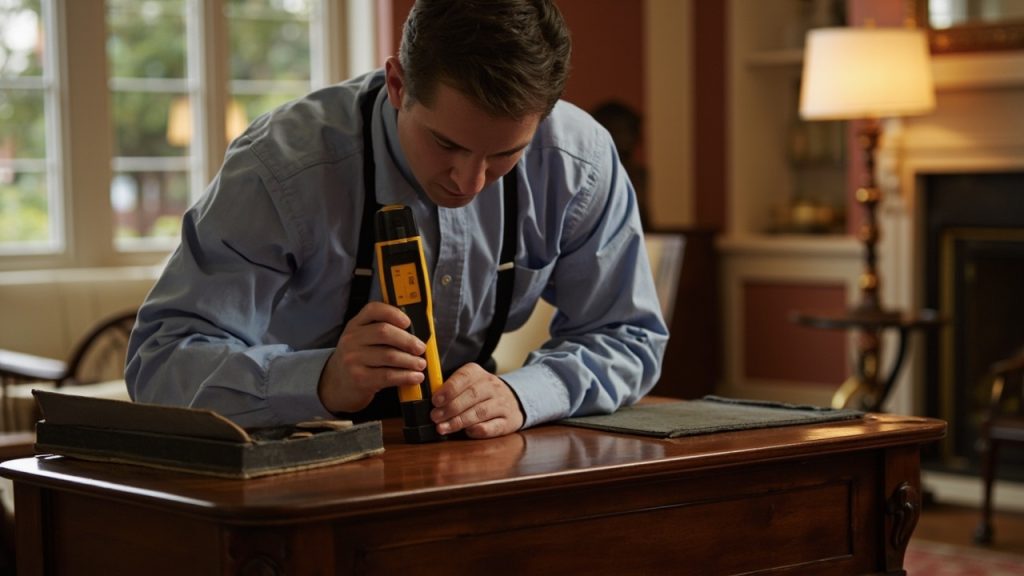
We use moisture meters to track the progress of the drying. These tools allow us to see the moisture content deep inside the wood. We do not just look at the surface. We compare these readings to a dry standard. This is the normal moisture level for a similar piece in a healthy environment. We do not stop the drying process until your furniture reaches its goal moisture content. This prevents the hidden moisture that often leads to future rot or structural failure. In 2026, our meters are calibrated for specific wood species to ensure the most accurate readings possible for historic hardwoods.
We also monitor the Grains Per Pound (GPP) of the air. This measurement tells us exactly how much water vapor is in each pound of dry air. By maintaining a specific GPP in your Ansley Park home, we prevent secondary damage to other items like oil paintings and silk wallpapers. This scientific approach is the only way to ensure the safety of high value collections during an Atlanta summer. Our equipment is monitored 24/7 through remote sensors that alert us to any changes in the environment.
Insurance Documentation for Georgia Antique Claims
Filing an insurance claim for high value antiques in Georgia requires a specific documentation process in 2026. Georgia insurance adjusters expect a detailed inventory that includes the pre loss condition of every piece. We provide a digital record that includes high resolution photographs and descriptions of the items before we move them. This is vital for residents near the High Museum of Art who may own pieces with significant appraisal values.
You should gather any existing appraisals or receipts for your furniture as soon as possible. In 2026, insurance companies often require a professional conservator to verify the restoration plan before they approve the costs. We work with these specialists to provide a detailed scope of work. This includes the specific drying methods, the materials used for stabilization, and the expected outcome. Having this documentation ready ensures that your claim moves quickly. It also ensures you receive the full value of the restoration services.
We also document the specific moisture readings throughout the process. This proof of drying is necessary to satisfy the requirements of high value asset policies. If the insurance company questions why a piece took ten days to dry, we show them the psychrometric charts. These charts prove the controlled rate of moisture removal. This level of detail protects your financial interests and ensures the integrity of your collection is maintained according to Georgia state standards. Following IICRC standards is essential for a successful claim in the current market.
Remember that many standard homeowner policies have limits on jewelry and fine art. You must check if your antique furniture falls under a separate rider. If it does, the documentation requirements are even more strict. We provide a comprehensive report that can be submitted directly to your adjuster. This report includes environmental logs and a certificate of completion that confirms the items have reached their dry standard.
The Pack Out Process and Storage Conditions
In many water damage cases, the home environment is too unstable to allow for on site restoration. This is where a professional pack out becomes necessary. During this process, our team carefully inventories every item in the affected area. Each piece is photographed and tagged before being moved to a secure and climate controlled facility. This is particularly important for residents near Piedmont Park who may have extensive collections. A digital inventory ensures that nothing is lost and provides a clear record for your insurance company.
Our 2026 storage facilities are designed specifically for antique preservation. We maintain a strict temperature set point of 70 degrees Fahrenheit with a variance of only two degrees. The relative humidity is kept between 45 and 50 percent. This range is the industry standard for preventing both wood shrinkage and mold growth. Standard storage units do not offer this level of control. They can cause more damage to your antiques than the original water leak. We use HEPA air filtration in our facilities to ensure that no dust or mold spores settle on your furniture while it is in our care.
The transition from your home to our facility is handled using air ride suspension vehicles. This minimizes the vibration that can loosen old joinery or cause brittle finishes to flake. Once the items arrive at our facility, they are placed on elevated shelving. This protects them from any floor level humidity. We provide you with access to your digital inventory. You can track the status of each piece during the restoration process. This transparency is a cornerstone of our service in 2026.
A pack out also allows us to focus on the structure of your home. While your furniture is safe in our facility, we can perform deeper drying on your floors and walls. In Ansley Park, historic plaster walls take a long time to dry. Moving the furniture out of the room allows for better airflow and faster structural restoration. This reduces the total time your home is under construction.
Restoration Method Success Rates and Timelines
When you are deciding whether to restore or replace an item, the timeline and potential for success are major factors. The following table provides an overview of what to expect during the content restoration process in Atlanta.
| Item Category | Restoration Method | Average Timeline | Success Rate |
|---|---|---|---|
| Solid Wood Furniture | Controlled Dehumidification | 5 to 10 Days | 95 percent |
| Upholstered Furniture | Steam Cleaning and Antimicrobial | 3 to 5 Days | 70 percent |
| Fine Art (Canvas) | Specialized Conservation | 2 to 4 Weeks | 85 percent |
| Rare Books | Vacuum Freeze Drying | 1 to 3 Weeks | 90 percent |
| Electronics | Ultrasonic Cleaning | 3 to 7 Days | 75 percent |
| Oriental Rugs | Submersion Washing and Centrifuge Drying | 7 to 14 Days | 92 percent |
| Gilded Frames | Dry Surface Cleaning and Stabilization | 10 to 20 Days | 80 percent |
Success rates depend on the speed of intervention. For example, oriental rugs can often be saved if they are professional cleaned and dried before the dyes begin to bleed. Once dye transfer happens, the restoration becomes much more complex. Similarly, gilded frames are very sensitive to humidity. The gesso under the gold leaf can soften and crumble if left in a damp environment for too long. We prioritize these items during the pack out process to ensure the best possible outcome.
Protecting Your Home from Secondary Damage
The water you see is only part of the problem. Secondary damage is caused by the high humidity levels that follow a leak. In the humid Atlanta summer of 2026, the air inside a water damaged home can quickly reach 90 percent relative humidity. This airborne moisture settles on cool surfaces throughout the house. It affects rooms that were not touched by the liquid water. This can cause wallpaper to peel, art to ripple in its frame, and mold to grow on the backs of paintings hanging on external walls.
To prevent this, we use industrial grade LGR dehumidifiers. These machines are far more powerful than a standard home dehumidifier. They pull moisture out of the air even when the humidity levels are already low. This is essential for protecting sensitive antiques. If you are located in the northern suburbs, you can find similar specialized help through our Sandy Springs flood cleanup and professional water extraction services. We bring the same level of technical precision to every neighborhood in the metro area.
Secondary damage often affects items like grandfather clocks or pianos. These pieces have complex internal mechanisms that are sensitive to even slight changes in humidity. A tall case clock might continue to run, but the moisture can cause the wooden case to swell. This pinches the pendulum or weights. We use remote monitoring sensors in 2026 to track the conditions inside these delicate pieces in real time. This allows us to adjust our drying equipment before any mechanical failure occurs. We also work with local horologists and piano tuners to ensure these items are recalibrated once they are dry.
The Importance of Professional Antique Conservation
There is a significant difference between a furniture repair shop and an antique conservator. For high value items, we often collaborate with specialists who understand the chemistry of historic materials. According to the current restoration standards, the goal is to return the item to its pre loss condition while maintaining its historical integrity. This might involve using reversible adhesives or specific types of wax that match the original craftsmanship of the piece.
For more information on the history and care of antiques, you can consult resources like the Smithsonian Institution which provides guidelines on the long term preservation of various materials. We use these high level standards to guide our local restoration efforts in Atlanta. We know that these pieces are not just furniture. They are tangible links to your family history and the architectural heritage of Ansley Park. Using the wrong glue or a modern finish can destroy the value of a piece permanently.
In 2026, the restoration process involves a blend of traditional craftsmanship and modern technology. We might use digital imaging to recreate missing pieces of a carved inlay or 3D scanning to ensure the structural symmetry of a warped chair leg. These tools allow us to achieve results that were difficult in previous years. Our focus remains on the preservation of original materials whenever possible. This maintains the value of your antique collection and respects the history of the craftsmen who built it.
When water threatens your home, the pressure to make quick decisions can be overwhelming. Do not let the urgency of the situation lead to the disposal of items that can be saved. With the right technical approach and immediate intervention, even the most delicate antiques can survive a major water event. We provide the expertise and the equipment needed to protect your home and your history. If you are facing a leak right now, contact us to begin the restoration process and secure your belongings before the damage progresses any further.
{
“@context”: “https://schema.org”,
“@type”: “BlogPosting”,
“headline”: “How to Save Heirloom Furniture and Antiques After an Ansley Park Water Leak”,
“description”: “Learn how to save your Ansley Park antiques after a 2026 water leak. Expert tips on drying wood, managing humidity, and professional content restoration in Atlanta.”,
“wordCount”: 3120,
“datePublished”: “2026-03-08T11:46:00.000Z”,
“dateModified”: “2026-03-08T11:46:00.000Z”,
“inLanguage”: “en-US”,
“mainEntityOfPage”: {
“@type”: “WebPage”,
“@id”: “https://victorywaterdamagerestorationatlanta.com”
},
“publisher”: {
“@type”: “LocalBusiness”,
“name”: “Victory Water Damage Restoration Atlanta”,
“url”: “https://victorywaterdamagerestorationatlanta.com”
},
“author”: {
“@type”: “Organization”,
“name”: “Victory Water Damage Restoration Atlanta”,
“url”: “https://victorywaterdamagerestorationatlanta.com”
},
“image”: {
“@type”: “ImageObject”,
“url”: “https://victorywaterdamagerestorationatlanta.com/wp-content/uploads/2026/03/how-to-save-heirloom-furniture-and-antiques-after-1.jpg”
}
}
{
“@context”: “https://schema.org”,
“@type”: “LocalBusiness”,
“name”: “Victory Water Damage Restoration Atlanta”,
“url”: “https://victorywaterdamagerestorationatlanta.com”,
“address”: {
“@type”: “PostalAddress”,
“addressLocality”: “Atlanta”
},
“areaServed”: {
“@type”: “City”,
“name”: “Atlanta”
}
}
{
“@context”: “https://schema.org”,
“@type”: “BreadcrumbList”,
“itemListElement”: [
{
“@type”: “ListItem”,
“position”: 1,
“name”: “Home”,
“item”: “https://victorywaterdamagerestorationatlanta.com”
},
{
“@type”: “ListItem”,
“position”: 2,
“name”: “Blog”,
“item”: “https://victorywaterdamagerestorationatlanta.com/blog”
},
{
“@type”: “ListItem”,
“position”: 3,
“name”: “How to Save Heirloom Furniture and Antiques After an Ansley Park Water Leak”
}
]
}
{
“@context”: “https://schema.org”,
“@type”: “Service”,
“serviceType”: “Water Damage Restoration”,
“provider”: {
“@type”: “LocalBusiness”,
“name”: “Victory Water Damage Restoration Atlanta”,
“url”: “https://victorywaterdamagerestorationatlanta.com”
},
“areaServed”: {
“@type”: “City”,
“name”: “Atlanta”
},
“description”: “Learn how to save your Ansley Park antiques after a 2026 water leak. Expert tips on drying wood, managing humidity, and professional content restoration in Atlanta.”
}