
Choosing Between DIY Drying and Hiring a Pro for a Leak in Dunwoody
A water leak in your Dunwoody home presents an immediate challenge that requires a quick decision. The high humidity levels common in the Atlanta metro area during 2026 mean that moisture trapped in your walls or subflooring can lead to microbial growth in less than 24 hours. Many homeowners in neighborhoods like Dunwoody Village or near Mount Vernon Road consider handling the cleanup themselves to save money. Understanding the limits of consumer grade equipment and the specific physics of structural drying is necessary to protect your property value and health.
The decision to handle a leak yourself or call a specialist depends on the volume of water and the source. Small spills on non porous surfaces like tile or luxury vinyl plank are often manageable. When water saturates porous materials like drywall, hardwood floors, or carpet padding, the situation changes. If you are dealing with a significant issue, you might need to know how to get fast emergency water damage restoration in Atlanta when every minute counts.

Understanding Water Categories Before You Start
Restoration professionals in 2026 classify water into three distinct categories based on its cleanliness and potential health risks. You must identify the category before attempting any DIY work. Category 1 water comes from a clean source like a broken supply line or a leaking faucet. This is the only type of water damage that a homeowner should even consider managing without professional assistance. Even then, the drying must be complete to prevent future issues.
Category 2 water is gray water. This includes discharge from dishwashers or washing machines. It contains significant contamination and has the potential to cause discomfort or sickness if consumed or touched. Category 3 water is black water. This is highly contaminated and contains pathogenic, toxigenic, or other harmful agents. Examples include sewage, seawater, or rising water from rivers and streams like Nancy Creek after a heavy Dunwoody storm. You should never attempt to clean Category 3 water yourself because it requires specialized personal protective equipment and antimicrobial treatments.
The Science of Structural Drying in the Atlanta Humidity
Drying a home in Dunwoody during the 2026 season requires more than just opening windows and turning on ceiling fans. In fact, opening windows when the outdoor humidity is above 60 percent can actually make the situation worse. Professional restorers use the science of psychrometry to manage the temperature, humidity, and airflow needed for evaporation. This process involves monitoring the Grains Per Pound (GPP) of moisture in the air.
Consumer grade dehumidifiers are designed to keep a basement comfortable, but they cannot handle the massive moisture load of a flooded room. They typically stop being effective once the relative humidity drops to a certain point, even if the building materials are still wet. Professional Low Grain Refrigerant (LGR) dehumidifiers are far more efficient. They can pull moisture from the air even in very dry conditions, which forces the moisture out of the deep pores of your wood framing and subfloor.
The Risk of Secondary Damage
If you fail to dry the structure correctly, you face the risk of secondary damage. This includes the warping of hardwood floors, the sagging of drywall, and the growth of mold. In 2026, building codes in the Atlanta area are strict regarding mold remediation, and failing to address a leak properly can lead to expensive complications during a home inspection if you ever decide to sell your property. Homeowners in high end areas like professional water damage restoration for luxury homes in Buckhead often face similar challenges with moisture trapped behind high end finishes.
Equipment Comparison Between Home Grade and Professional Restoration
The tools you have in your garage are not the same as the industrial equipment used by a certified team. This table shows the differences in performance and capability for 2026 equipment standards.
| Equipment Type | Homeowner DIY Tool | Professional Grade Tool | Key Difference |
|---|---|---|---|
| Extraction | Shop Vacuum | Truck Mounted HVE | Suction power and gallon capacity |
| Dehumidification | Standard Portable | LGR Dehumidifier | Ability to reach lower GPP levels |
| Air Movement | Box Fan or Ceiling Fan | Centrifugal Air Mover | Static pressure and focused CFM |
| Moisture Detection | Visual Inspection | Infrared Thermal Camera | Finding hidden pockets of water |
Using a shop vacuum to pull water from a carpet only removes about 10 to 15 percent of the moisture. The rest stays in the padding and the subfloor. Without high volume extraction, the drying time increases from three days to over a week. This extended timeframe is exactly what allows mold spores to colonize. For those dealing with a major failure, looking for emergency help for a burst pipe in Atlanta and how to find fast cleanup is the safest path to protecting your home.

Identifying the Class of Water Damage
In addition to categories, the IICRC (Institute of Inspection Cleaning and Restoration Certification) defines four classes of water damage. This classification helps professionals determine the amount of equipment needed. You can find more information about these industry standards at the IICRC website.
- Class 1: Part of a room is wet with little or no wet carpet. Only low porosity materials like office furniture or concrete are affected.
- Class 2: An entire room is wet, and water has wicked up the walls less than 24 inches. Carpet and padding are saturated.
- Class 3: Water comes from overhead, saturating ceilings, walls, and the entire floor area. This is the most common class for a burst pipe on a second floor.
- Class 4: Specialty drying situations. This involves water trapped in hardwood, brick, stone, or concrete that requires very low humidity to release moisture.
If your situation is a Class 2 or higher, DIY drying is statistically likely to fail. The water wicks up into the insulation inside your walls through capillary action. Even if the drywall feels dry to the touch on the outside, the back side and the wall studs remain wet. This creates a hidden environment for mold that you may not smell or see for several months.
The True Cost of DIY versus Professional Services
Homeowners often choose DIY to avoid a high bill. However, you must consider the long term financial impact. If a leak is not documented and dried to a professional standard, insurance companies in 2026 may deny future mold claims, citing negligence. Professionals provide a full moisture map and drying logs that prove the house was restored to a dry standard. This documentation is vital for maintaining your home insurance policy coverage.
| Action Item | DIY Approach Estimated Time | Professional Approach Estimated Time | Success Rate |
|---|---|---|---|
| Initial Extraction | 4 to 8 hours | 1 to 2 hours | High with Pro Gear |
| Structural Drying | 7 to 10 days | 3 to 4 days | 99 percent for Pro |
| Monitoring | Intermittent/Visual | Daily with Sensors | Precision Accuracy |
| Mold Prevention | Chemical Sprays Only | Humidity Control | Scientific Guarantee |
If you live in neighboring areas, you might also be interested in Sandy Springs flood cleanup and professional water extraction services which follow these same rigorous 2026 standards. The goal is always to return the property to its pre loss condition as quickly as possible.

Hidden Challenges for Dunwoody Homes
Dunwoody has a mix of architectural styles. Older homes near the Perimeter area often have crawlspaces that are prone to moisture accumulation. A leak on the first floor can easily seep into the crawlspace, leading to wood rot in the floor joists. Professionals use crawlspace drying systems that the average homeowner cannot rent at a local hardware store. In contrast, newer commercial properties near Perimeter Center require a different approach to ensure business continuity. Those managers should focus on minimizing business downtime with Atlanta commercial water damage restoration.
Another issue in our local area is the presence of lead paint or asbestos in homes built before certain regulations. While we are currently in 2026, many Dunwoody residences are older. Disturbing wet materials like popcorn ceilings or old vinyl flooring can release dangerous fibers or dust. Professionals are trained to identify these risks and set up HEPA filtration and containment zones to protect the air quality of your home while they work. This is a critical safety step that most DIY projects overlook.
The Importance of Thermal Imaging
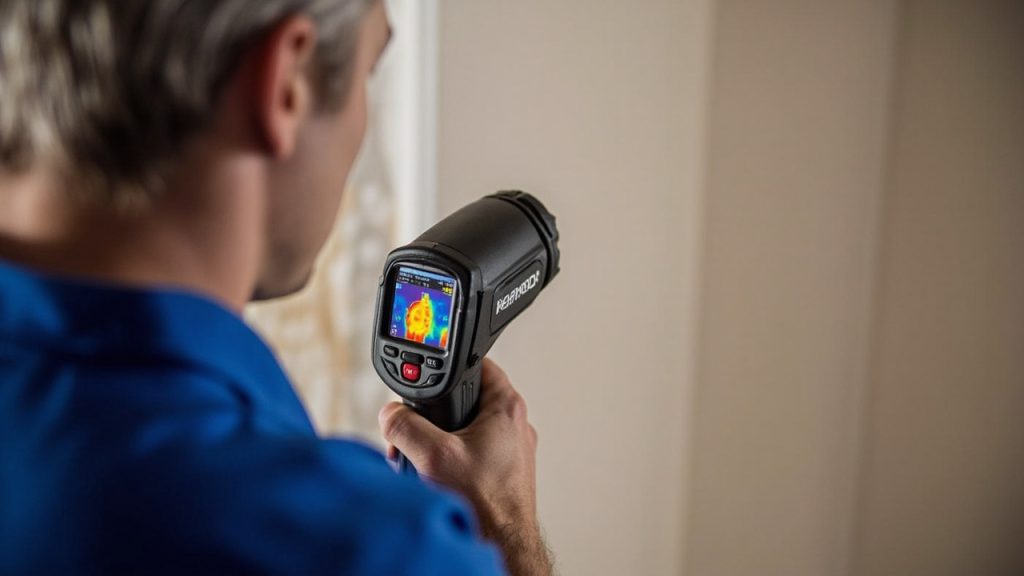
One of the most valuable tools a restoration expert brings to your Dunwoody home is a thermal imaging camera. Water cools the surfaces it touches as it begins to evaporate. This temperature difference shows up as a dark blue or purple area on an infrared screen. This technology allows us to see water inside a wall without tearing the drywall down. A homeowner using their hand to feel for wetness will miss these pockets. By the time the wall feels wet to a human hand, it is already completely saturated and likely beyond repair. Using these advanced tools is a key part of modern mold prevention strategies as outlined by the Environmental Protection Agency.
When to Call a Professional Immediately
There are specific signs that your leak has moved beyond the DIY phase. If you see any of the following, stop what you are doing and call a specialist. First, if water is dripping through a ceiling. This indicates a massive accumulation on the floor above that could lead to a structural collapse. Second, if you hear water running inside a wall but cannot find the source. Third, if you see any signs of mold growth or smell a musty odor. Finally, if the water has reached any electrical outlets or the breaker panel, you must evacuate the area and call for help immediately for safety reasons.
Restoring your home is about more than just getting things dry. It is about ensuring the structural integrity and safety of your living space. In the 2026 climate of Atlanta, where humidity is a constant factor, professional intervention is usually the most cost effective way to handle a significant water event. You gain peace of mind knowing that every drop of moisture has been accounted for and removed, protecting your Dunwoody investment for years to come.
{
“@context”: “https://schema.org”,
“@type”: “BlogPosting”,
“headline”: “Choosing Between DIY Drying and Hiring a Pro for a Leak in Dunwoody”,
“description”: “Deciding between DIY drying and calling a pro for a leak in Dunwoody. Learn when to handle a water leak yourself and when you need professional equipment in 2026.”,
“wordCount”: 1675,
“datePublished”: “2026-04-21T10:35:00.000Z”,
“dateModified”: “2026-04-21T10:35:00.000Z”,
“inLanguage”: “en-US”,
“mainEntityOfPage”: {
“@type”: “WebPage”,
“@id”: “https://victorywaterdamagerestorationatlanta.com”
},
“publisher”: {
“@type”: “LocalBusiness”,
“name”: “Victory Water Damage Restoration Atlanta”,
“url”: “https://victorywaterdamagerestorationatlanta.com”
},
“author”: {
“@type”: “Organization”,
“name”: “Victory Water Damage Restoration Atlanta”,
“url”: “https://victorywaterdamagerestorationatlanta.com”
},
“image”: {
“@type”: “ImageObject”,
“url”: “https://victorywaterdamagerestorationatlanta.com/wp-content/uploads/2026/03/deciding-between-diy-drying-and-calling-a-pro-for-1.jpg”
}
}
{
“@context”: “https://schema.org”,
“@type”: “LocalBusiness”,
“name”: “Victory Water Damage Restoration Atlanta”,
“url”: “https://victorywaterdamagerestorationatlanta.com”,
“address”: {
“@type”: “PostalAddress”,
“addressLocality”: “Atlanta”
},
“areaServed”: {
“@type”: “City”,
“name”: “Atlanta”
}
}
{
“@context”: “https://schema.org”,
“@type”: “BreadcrumbList”,
“itemListElement”: [
{
“@type”: “ListItem”,
“position”: 1,
“name”: “Home”,
“item”: “https://victorywaterdamagerestorationatlanta.com”
},
{
“@type”: “ListItem”,
“position”: 2,
“name”: “Blog”,
“item”: “https://victorywaterdamagerestorationatlanta.com/blog”
},
{
“@type”: “ListItem”,
“position”: 3,
“name”: “Choosing Between DIY Drying and Hiring a Pro for a Leak in Dunwoody”
}
]
}
{
“@context”: “https://schema.org”,
“@type”: “Service”,
“serviceType”: “Water Damage Restoration”,
“provider”: {
“@type”: “LocalBusiness”,
“name”: “Victory Water Damage Restoration Atlanta”,
“url”: “https://victorywaterdamagerestorationatlanta.com”
},
“areaServed”: {
“@type”: “City”,
“name”: “Atlanta”
},
“description”: “Deciding between DIY drying and calling a pro for a leak in Dunwoody. Learn when to handle a water leak yourself and when you need professional equipment in 2026.”
}