
The High Stakes of West Midtown Office Water Damage
West Midtown remains a central hub for Atlanta innovation and commerce in 2026. From the converted lofts near Westside Provisions to the glass office towers rising along Marietta Street, a water leak presents a major threat to business continuity. When a pipe bursts or a sprinkler head fails, the clock starts immediately. You have roughly 48 hours to make a choice that will dictate your restoration costs and your return to work timeline. You must decide if you can save the existing drywall through high-speed drying or if you need to tear it out and start over. Making the wrong call leads to secondary damage and potential microbial growth that could shut down your entire floor for weeks.
Atlanta weather adds a layer of difficulty to this decision. Our local humidity levels in 2026 continue to challenge standard drying techniques. If your office is located in one of the older brick buildings on Howell Mill Road, the thick walls and tight spaces trap moisture differently than the steel and glass structures in the Interlock area. Understanding the physics of moisture is the first step in protecting your commercial investment. You need to assess the source of the water and the level of saturation before you commit to a restoration plan.

Understanding the Three Categories of Water
The IICRC S500 standard provides the framework for every professional restoration project in Atlanta. The first thing a technician does is identify the category of water that hit your office. Category 1 water comes from a clean source like a broken supply line or a failed sink faucet. In 2026, many West Midtown offices use high-efficiency plumbing that limits the volume of these leaks, making drying more likely if you catch it fast. If the water is clean, drying the drywall is usually the most cost-effective path. You can keep your walls intact and avoid the mess of demolition.
Category 2 water contains some level of contamination, such as a dishwasher leak or an HVAC condensate line overflow. This water might contain chemicals or organic matter that could support mold growth. In these cases, we evaluate the porosity of the material. Drywall is essentially a paper-faced gypsum sandwich. It acts like a sponge. If Category 2 water sits for more than 24 hours, the risks of keeping it often outweigh the benefits. You can find more details on handling these urgent situations at our page about How to Get Fast Emergency Water Damage Restoration in Atlanta When Every Minute Counts.
Category 3 water is gross. This is sewage, storm surge from a heavy Atlanta downpour, or water that has sat long enough to go septic. If your West Midtown office experiences a backup from the city sewer lines or floodwater from the street, there is no debate. You must tear out the drywall. You cannot safely clean the gypsum core of a wall once it has absorbed pathogenic material. In these scenarios, we remove the wall at least 2 feet above the highest moisture point to ensure the remaining structure is clean and safe for your employees.
The Restoration Decision Matrix
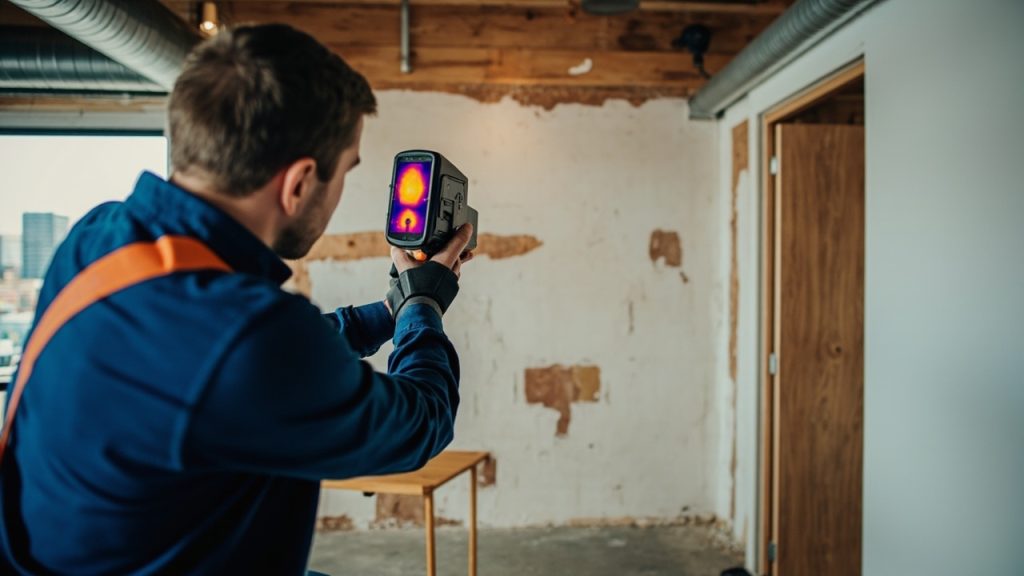
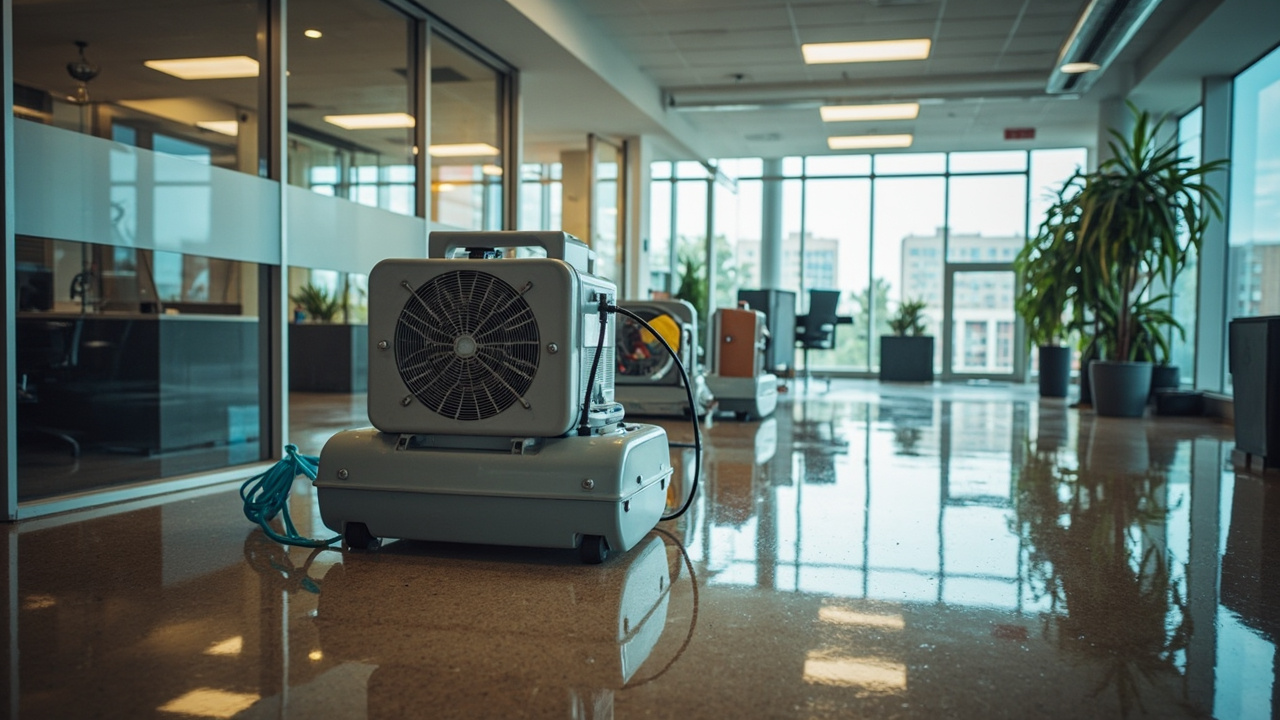
Determining the right course of action requires hard data. We use moisture meters and thermal imaging cameras to map the migration of water through your office suite. If the moisture content in the gypsum board is below a specific threshold and the water is clean, we can often employ structural drying. This involves high-velocity air movers and LGR (Low Grain Refrigerant) dehumidifiers. These machines are designed to pull moisture out of the air, creating a vapor pressure differential that draws water out of the walls. In 2026, the efficiency of these units has improved, allowing us to dry commercial spaces faster than ever before.
Table 1: Drywall Restoration vs. Replacement Factors
| Factor | Drying is Best When | Replacement is Mandatory When |
|---|---|---|
| Water Source | Category 1 (Clean supply lines) | Category 3 (Sewage or flood) |
| Duration | Less than 24-48 hours | Over 72 hours of saturation |
| Material Type | Standard painted drywall | Vinyl wallpaper or heavy coatings |
| Structural Integrity | Wall remains rigid and upright | Wall is sagging or crumbling |
| Insulation | No insulation or fiberglass only | Blown-in or cellulose insulation |
The presence of vinyl wallpaper in many West Midtown executive suites is a major factor. Vinyl acts as a vapor barrier. It prevents moisture from evaporating. If your office has vinyl wall coverings, the water gets trapped behind the paper and rots the gypsum. In these cases, we almost always recommend removal. Even if the front of the wall looks fine, the back is likely growing mold within 72 hours. Removing the vinyl often destroys the drywall surface anyway, so a full replacement becomes the faster and more sanitary option.
Technical Tools for Office Assessment
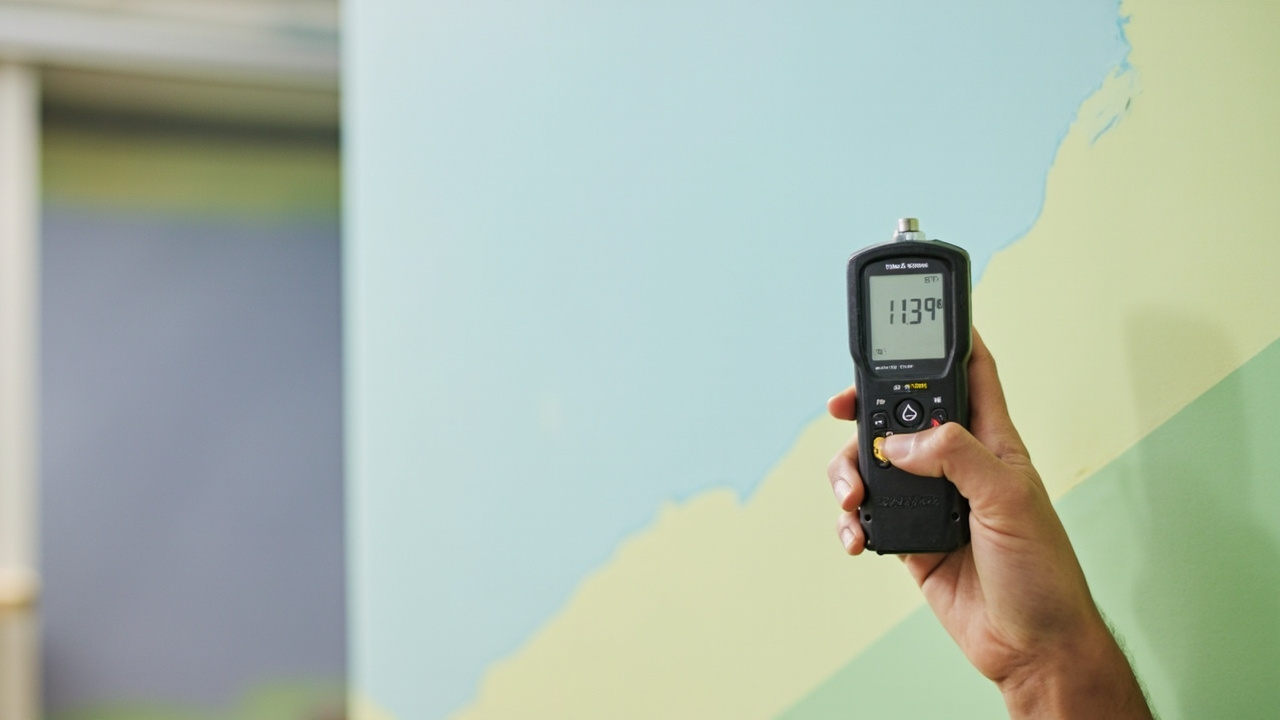
We do not guess when it comes to your office. Professional restoration requires a precise moisture map. We use non-penetrating moisture meters to check the surface of your walls without leaving marks. We also use penetrating probes to check the baseplates and the studs behind the drywall. If the wooden studs are saturated, we must dry those even if we remove the drywall. Failure to dry the internal framing is the number one cause of persistent musty odors in Atlanta offices.
Thermal imaging is another critical tool in 2026. Infrared cameras allow us to see temperature differences on your walls. Water evaporates and cools the surface, appearing as dark spots on our screens. This technology helps us find hidden leaks in the ceiling or behind filing cabinets that might otherwise be missed. If we see a large thermal signature, we know the saturation is deep. Deep saturation in an office with limited airflow usually points toward replacement. You can learn more about how we manage these technical aspects to Minimizing Business Downtime with Atlanta Commercial Water Damage Restoration.
The Impact of Atlanta Humidity on Drying Timelines
Atlanta is notorious for high dew points. In 2026, we have seen summer humidity levels that make open-air drying impossible. If we try to dry your West Midtown office by just opening the windows, we are actually pumping more moisture into the building. Professional restoration requires a closed-drying system. We seal the affected area and use industrial dehumidifiers to drop the relative humidity below 30 percent. This creates an environment where moisture has no choice but to leave the drywall.
The drying process for a standard office wall usually takes 3 to 5 days. If the wall is double-layered for soundproofing, which is common in many West Midtown creative studios, that timeline can double. In some cases, it is faster and cheaper to simply remove the double-layer drywall and install new sheets. This gets your team back to work in a shorter timeframe. We always weigh the cost of the specialized drying equipment against the cost of the demolition and reconstruction. Speed is often the priority for local businesses.
Cost Considerations and ROI for Commercial Spaces
Many office managers worry about the price tag of a tear-out. However, you must consider the long-term ROI. Drying a wall requires high energy consumption for several days and daily monitoring by a certified technician. If the drying is successful, you save on the cost of new materials and painting. If the drying fails after three days, you have paid for the equipment and you still have to pay for the replacement. This is why a proper initial assessment by an IICRC (Institute of Inspection Cleaning and Restoration Certification) professional is vital.
Table 2: Estimated Restoration Timelines in 2026
| Action Item | Drying Scenario | Replacement Scenario |
|---|---|---|
| Initial Inspection | 2-4 Hours | 2-4 Hours |
| Water Extraction | 4-8 Hours | 4-8 Hours |
| Equipment Setup / Demo | 2-4 Hours | 6-12 Hours |
| Active Processing | 3-5 Days (Drying) | 1-2 Days (Hanging/Finishing) |
| Final Cleanup | 1 Day | 1-2 Days |
| Total Project Time | 5-7 Days | 4-6 Days |
As you can see, replacement is often faster than drying if the damage is extensive. For a small leak, drying wins. For a major event, like a Emergency Help for a Burst Pipe in Atlanta and How to Find Fast Cleanup, replacement might get your office back to full capacity several days sooner. We help you crunch these numbers based on your specific square footage and the current 2026 labor rates in the Atlanta metro area.
When to Insist on Removal
There are red flags that should lead you to insist on drywall removal immediately. If you see visible mold growth, the decision is made for you. In 2026, the Georgia Department of Public Health continues to emphasize the importance of air quality in workspaces. You cannot dry moldy drywall and expect it to be safe. The spores will remain in the gypsum and reactivate the next time the humidity spikes.
- Evidence of microbial growth on the wall or baseboards.
- Water coming from a source containing sewage or biohazards.
- Drywall that has lost its structural integrity and feels soft to the touch.
- Saturated insulation behind the drywall that cannot be accessed for drying.
- Presence of multiple layers of drywall or non-breathable wall coverings.
Another factor is the baseplate. The wood at the bottom of the wall frame is where water pools. If the drywall is touching a wet baseplate, it will continue to wick moisture upward like a candle. In many West Midtown offices, we perform what is called a flood cut. We remove the bottom 12 to 24 inches of the drywall. This allows us to dry the structural framing quickly while saving the top half of the wall. This hybrid approach is often the best compromise between cost and speed.
Final Steps in Your West Midtown Office Restoration
Once the decision is made and the work begins, documentation is your best friend. If you are filing an insurance claim, you need a moisture map, photos of the damage, and a detailed log of the drying readings. We provide this documentation for all our commercial clients in West Midtown. We also coordinate with your property manager. Many buildings in the 30318 zip code have specific rules about after-hours work and the use of elevators for hauling debris.
If your office is part of a larger complex, we also check the adjacent suites. Water follows the path of least resistance and often travels through the floor slab or the plenum space in the ceiling. We ensure that your neighbor’s leak does not become your mold problem. For those managing properties in surrounding areas, we also offer Sandy Springs Flood Cleanup and Professional Water Extraction Services for a consistent approach across your portfolio.
Your Path Forward
Handling water damage in a West Midtown office requires a quick, data-driven approach. You do not have to guess whether your walls are salvageable. By understanding the water category and using the right technical tools, you can minimize the impact on your business and your bottom line. Whether you choose to dry the structure in place or perform a full replacement, the goal is always to create a safe, dry, and professional environment for your team. If you find standing water in your office today, act quickly to secure your property and start the drying process before the Atlanta humidity takes its toll.
{
“@context”: “https://schema.org”,
“@type”: “BlogPosting”,
“headline”: “Deciding Whether to Dry or Replace Your West Midtown Office Drywall After a Leak”,
“description”: “Learn whether to dry or replace wet office drywall in West Midtown. Save time and money with expert Atlanta commercial restoration tips for 2026.”,
“wordCount”: 1864,
“datePublished”: “2026-03-09T12:53:00.000Z”,
“dateModified”: “2026-03-09T12:53:00.000Z”,
“inLanguage”: “en-US”,
“mainEntityOfPage”: {
“@type”: “WebPage”,
“@id”: “https://victorywaterdamagerestorationatlanta.com”
},
“publisher”: {
“@type”: “LocalBusiness”,
“name”: “Victory Water Damage Restoration Atlanta”,
“url”: “https://victorywaterdamagerestorationatlanta.com”
},
“author”: {
“@type”: “Organization”,
“name”: “Victory Water Damage Restoration Atlanta”,
“url”: “https://victorywaterdamagerestorationatlanta.com”
},
“image”: {
“@type”: “ImageObject”,
“url”: “https://victorywaterdamagerestorationatlanta.com/wp-content/uploads/2026/03/should-you-try-to-dry-your-west-midtown-office-dry-1.jpg”
}
}
{
“@context”: “https://schema.org”,
“@type”: “LocalBusiness”,
“name”: “Victory Water Damage Restoration Atlanta”,
“url”: “https://victorywaterdamagerestorationatlanta.com”,
“address”: {
“@type”: “PostalAddress”,
“addressLocality”: “Atlanta”
},
“areaServed”: {
“@type”: “City”,
“name”: “Atlanta”
}
}
{
“@context”: “https://schema.org”,
“@type”: “BreadcrumbList”,
“itemListElement”: [
{
“@type”: “ListItem”,
“position”: 1,
“name”: “Home”,
“item”: “https://victorywaterdamagerestorationatlanta.com”
},
{
“@type”: “ListItem”,
“position”: 2,
“name”: “Blog”,
“item”: “https://victorywaterdamagerestorationatlanta.com/blog”
},
{
“@type”: “ListItem”,
“position”: 3,
“name”: “Deciding Whether to Dry or Replace Your West Midtown Office Drywall After a Leak”
}
]
}
{
“@context”: “https://schema.org”,
“@type”: “Service”,
“serviceType”: “Water Damage Restoration”,
“provider”: {
“@type”: “LocalBusiness”,
“name”: “Victory Water Damage Restoration Atlanta”,
“url”: “https://victorywaterdamagerestorationatlanta.com”
},
“areaServed”: {
“@type”: “City”,
“name”: “Atlanta”
},
“description”: “Learn whether to dry or replace wet office drywall in West Midtown. Save time and money with expert Atlanta commercial restoration tips for 2026.”
}